






What's Happening?
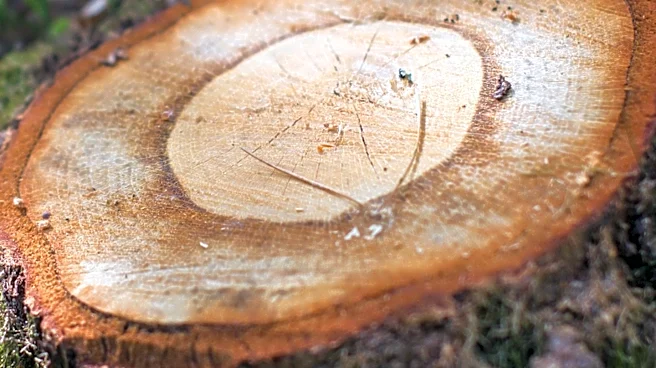
Dendrochronologists are using tree-ring analysis to challenge the long-held myth of untouched American wilderness, revealing extensive historical fire management by Indigenous communities. Researchers like Joe Marschall, Michael Stambaugh, and Neal Humke
are conducting fire-scar field research, with the North American Tree-Ring Fire-Scar Network, launched in 2022, serving as a crucial database. This network, comprising over three thousand study sites and thirty-seven thousand fire-scarred trees, provides evidence that Indigenous peoples were the primary ignition source for fires across the continent, from Central America to Alaska. These fires, often set twice a year, created open, savannah-like forests that were biodiverse and easy to travel through, as documented in colonial accounts from the 17th century. The absence of Indigenous fire management after colonization led to significant ecological changes, including the growth of dense underbrush.
Why It's Important?
This research fundamentally redefines our understanding of North American ecological history and the role of Indigenous peoples in shaping the landscape. It highlights that the 'wilderness' encountered by European settlers was, in many areas, a managed environment, not a pristine, untouched natural state. This perspective is crucial for contemporary land management and conservation efforts, suggesting that active, culturally informed fire practices may be essential for maintaining healthy ecosystems. The findings also underscore the profound and lasting impact of colonization, not only on human populations but also on the environment. Recognizing Indigenous land management techniques can inform modern ecological restoration, promoting biodiversity and reducing the risk of catastrophic wildfires by reintroducing controlled burns that mimic historical patterns.
What's Next?
Dendrochronologists are continuing their quest to trace Indigenous fire patterns deeper into the past, though this work is increasingly challenging due to the ephemeral nature of wood and the destruction of pre-Columbian tree remains. Efforts are focused on preserving existing fire-scarred samples and identifying new ones before they are lost to decay or development. The ongoing research will likely lead to a more comprehensive understanding of regional variations in Indigenous fire practices and their long-term ecological effects. This knowledge can then be integrated into current land management policies, potentially influencing how national parks, forests, and other natural areas are managed. Furthermore, the findings may contribute to broader discussions about Indigenous land rights and traditional ecological knowledge, advocating for their inclusion in modern conservation strategies.
Beyond the Headlines
The reinterpretation of American wilderness through tree-ring data has significant cultural and ethical implications. It challenges the romanticized notion of a 'virgin' continent, revealing a history of sophisticated environmental stewardship by Indigenous peoples. This shift in understanding can foster greater respect for Indigenous knowledge systems and their historical contributions to ecological balance. The destruction of ancient tree remains, often for mundane purposes like kindling, highlights a broader societal disregard for invaluable historical and ecological data. This research encourages a re-evaluation of how we value natural resources and historical artifacts, emphasizing the importance of preserving these 'witness trees' as irreplaceable records of the past. It also prompts a deeper reflection on the long-term consequences of human actions on ecosystems and the potential for historical practices to offer solutions to contemporary environmental challenges.