






What's Happening?
A comprehensive survey of over 110,000 registered voters across all 50 states, conducted by NORC at the University of Chicago in collaboration with EdChoice, has revealed a significant lack of public knowledge regarding school choice programs. The NORC Civic
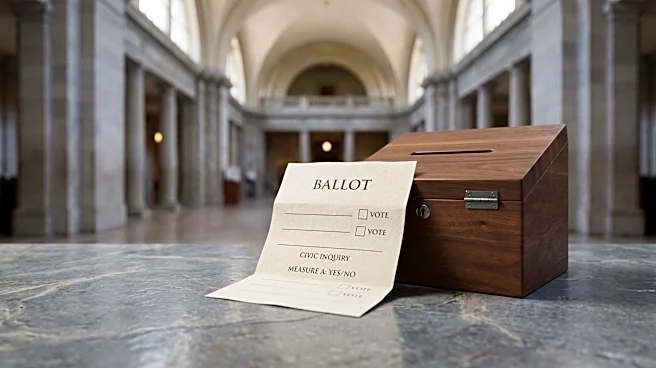
Health and Elections Project, conducted prior to the 2026 midterm elections, included questions on school vouchers, education savings accounts (ESAs), and the federal tax credit in K-12 education. Nationally, only 16% of respondents reported knowing 'a lot' about vouchers, with 48% knowing 'nothing at all' or having never heard of them. Knowledge levels were even lower for ESAs (11% knew 'a lot') and the Federal Scholarship Tax Credit (9% knew 'a lot'). Even in states with existing school choice programs, only 13% of voters claimed to know 'a lot' about their state's specific program. Wisconsin, West Virginia, and Iowa, states with prominent choice programs, showed slightly higher but still limited knowledge, with fewer than a quarter of voters in these states knowing 'a lot' about vouchers.
Why It's Important?
The widespread lack of voter knowledge about school choice programs presents both a challenge and an opportunity for advocates. On one hand, the low awareness indicates that the majority of the American public is not well-informed about these educational policies, which could hinder their broader adoption or understanding. This suggests that public discourse around school choice may be occurring without a foundational understanding from a large segment of the electorate. On the other hand, this 'blank slate' scenario offers advocates a chance to frame the debate and educate voters without having to overcome entrenched misconceptions. The findings imply that significant investment in public awareness campaigns will be necessary for school choice initiatives to gain broader support or for voters to make informed decisions on related ballot measures. This knowledge gap could also influence policy outcomes, as uninformed voters may be less likely to support or oppose such programs effectively.
What's Next?
The findings suggest that school choice advocates will likely intensify their efforts to educate the public on the various forms and benefits of these programs. This could involve more targeted informational campaigns, increased media outreach, and grassroots organizing to explain concepts like vouchers and ESAs. Policymakers considering new school choice legislation may also need to incorporate robust public education components into their strategies to build support. Conversely, opponents of school choice may also leverage this knowledge gap, potentially framing the programs in a negative light to an uninformed populace. Future elections and legislative debates on education policy are likely to see increased emphasis on explaining these programs to voters, as both sides vie to shape public opinion from a relatively low baseline of understanding.
Beyond the Headlines
The survey results highlight a broader issue of public engagement and understanding of complex policy issues. The low awareness of school choice, despite its presence in public discourse for decades, suggests that many voters may rely on limited information or partisan cues when forming opinions on educational reforms. This could lead to policies being enacted or rejected based on superficial understanding rather than a deep appreciation of their potential impacts. Furthermore, the disparity in knowledge across states, even those with established programs, indicates that local context and media coverage play a crucial role in public awareness. This situation raises questions about the effectiveness of current communication strategies by educational stakeholders and the general public's capacity to engage with detailed policy debates, potentially impacting democratic participation and informed decision-making on critical social issues.