




What's Happening?
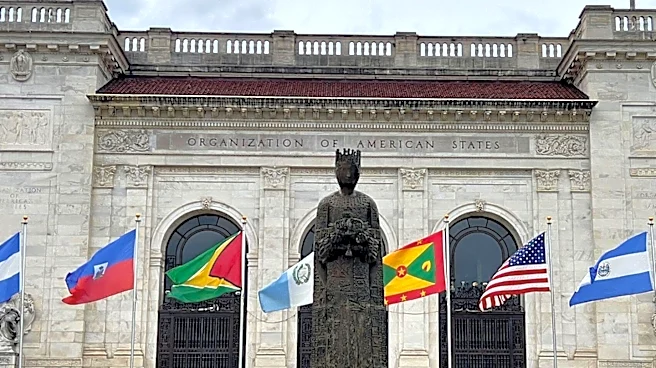
Sir Ronald Sanders, Antigua and Barbuda’s ambassador to the U.S. and the OAS, has highlighted the fading promise of a 'Haitian-led solution' to Haiti's deepening crisis. He argues that while the principle of Haitian self-determination is sound, there
is a lack of legitimate, representative, and coherent political processes capable of delivering such a solution. UN experts have presented evidence alleging connections between some politically influential individuals and armed gangs responsible for much of the country's instability. These reports suggest that former legislators have supplied weapons and financial resources to armed groups and that political figures may exploit gang relationships to influence elections. A Chatham House study further reveals that over 75% of Haitians distrust politicians, yet nearly 90% consider elections important. The electoral timetable has been thrown into uncertainty, with candidate registration extended and a revised calendar pending.
Why It's Important?
The situation in Haiti is critical for regional stability and international humanitarian efforts. The inability to establish a legitimate and effective government, coupled with the pervasive influence of criminal organizations, perpetuates a cycle of violence and instability. This directly impacts the well-being of ordinary Haitians, who suffer from a lack of basic services and security. The involvement of political actors with gangs undermines any genuine democratic process and makes it difficult for international assistance to be effective. For the U.S. and other international partners, the ongoing crisis in Haiti presents a complex challenge, requiring a delicate balance between respecting sovereignty and ensuring accountability and stability. The call for CARICOM and the OAS to insist on a clear distinction between sovereignty and the tolerance of criminal influence underscores the need for a more robust and principled international engagement.
What's Next?
The immediate next steps involve the publication of a revised electoral calendar, which remains uncertain. However, the deeper challenge lies in establishing a political process free from criminal influence and capable of commanding public confidence. CARICOM and the OAS are urged to broaden Haitian participation beyond political factions to include civil society, community organizations, women, youth, and professional bodies. This would involve supporting institutions with lawful mandates, transparency, and public accountability. International partners are expected to continue providing security, resources, and technical assistance, but with a stronger insistence on accountability and measurable progress. Investigations into networks identified by UN experts, enforcement of sanctions, and interruption of weapons supplies are also crucial to dismantle the power of criminal organizations and their political sponsors.
Beyond the Headlines
The crisis in Haiti exposes a fundamental dilemma in international relations: how to support national sovereignty while addressing systemic failures and criminal infiltration within a state. The concept of a 'Haitian-led solution' becomes problematic when the very leadership is compromised or lacks legitimacy in the eyes of its own people. This situation highlights the ethical imperative for international bodies like CARICOM and the OAS to move beyond rhetorical support for self-determination and actively promote the conditions for genuine, inclusive governance. The long-term implications include the risk of Haiti becoming a failed state, with severe humanitarian consequences and potential regional destabilization. It also raises questions about the effectiveness of current international aid and intervention strategies, suggesting a need for more targeted approaches that prioritize institutional strengthening, accountability, and the empowerment of civil society over mere political agreements among factions.