






What's Happening?
The chikungunya virus has been transmitted locally in Switzerland for the first time, specifically in the Ticino region. This marks a significant development as the affected individuals had not recently traveled to areas where the virus is typically circulating.
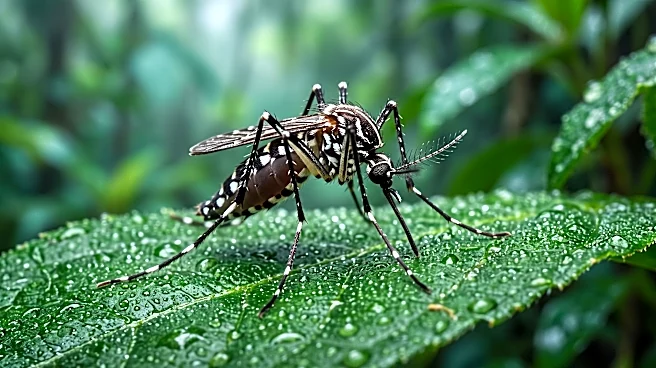
The transmission is attributed to the tiger mosquito, which is known to carry the virus. Symptoms of chikungunya include an abrupt onset of fever, often accompanied by severe joint and muscle pain, headache, nausea, fatigue, and rash. While severe complications are uncommon, the disease can contribute to the cause of death in older individuals. The cases are believed to be concentrated in the Magadino Plain area. Health authorities are monitoring the situation, though the risk of further transmission is currently considered very low due to the decline in mosquito activity as the season progresses. Historically, chikungunya was first described during an outbreak in southern Tanzania in 1952 and has since been identified in nearly 40 countries across Asia, Africa, Europe, and the Americas. Travelers remain the primary means by which the virus reaches Switzerland.
Why It's Important?
The local transmission of chikungunya in Switzerland is important because it indicates the expanding geographical reach of mosquito-borne diseases, even into regions not traditionally associated with them. This event highlights the increasing public health challenge posed by climate change and global travel, which facilitate the spread of vector-borne illnesses. For the U.S., this development serves as a cautionary tale, emphasizing the need for robust surveillance systems and preparedness strategies against similar emerging threats. The tiger mosquito, responsible for this transmission, is also present in parts of the U.S., raising concerns about potential local outbreaks if infected travelers introduce the virus. The absence of a vaccine or specific antiviral treatment for chikungunya means that public health efforts must focus on prevention, mosquito control, and early detection to mitigate potential outbreaks and protect vulnerable populations. This situation underscores the interconnectedness of global health and the necessity for international cooperation in disease surveillance and control.
What's Next?
Following the first local transmission of chikungunya in Switzerland, immediate next steps will likely involve intensified local surveillance in the Ticino region to identify any additional cases and monitor mosquito populations. Public health authorities will continue to educate residents on preventive measures, such as eliminating standing water where mosquitoes breed and using repellents. While the risk of further transmission is currently low due to declining mosquito activity, long-term strategies will focus on enhancing vector control programs and improving diagnostic capabilities for mosquito-borne diseases. Research into more effective vaccines and antiviral treatments for chikungunya is ongoing globally, with organizations like the EU's Health Emergency Preparedness and Response Authority (HERA) investing in such developments. For the U.S., this event may prompt a review of existing surveillance protocols for invasive mosquito species and arboviruses, particularly in areas with established tiger mosquito populations, to prepare for potential introductions and local transmissions.
Beyond the Headlines
The local transmission of chikungunya in Switzerland points to a broader, long-term shift in global disease patterns driven by environmental and societal factors. The expansion of the tiger mosquito into new territories, partly facilitated by climate change creating more favorable conditions and global trade transporting mosquito eggs, means that diseases once confined to tropical regions are now a concern for temperate zones. This raises ethical questions about global health equity and the responsibility of developed nations to support less resourced countries in combating these diseases at their source. Legally, it may prompt discussions on international health regulations and cross-border cooperation in vector control. Culturally, there may be a need for increased public awareness and adaptation to new health risks, requiring communities to adopt new habits for mosquito prevention. This event underscores the urgent need for a holistic approach to public health that integrates environmental management, global surveillance, and community engagement to address the evolving landscape of infectious diseases.