






What's Happening?
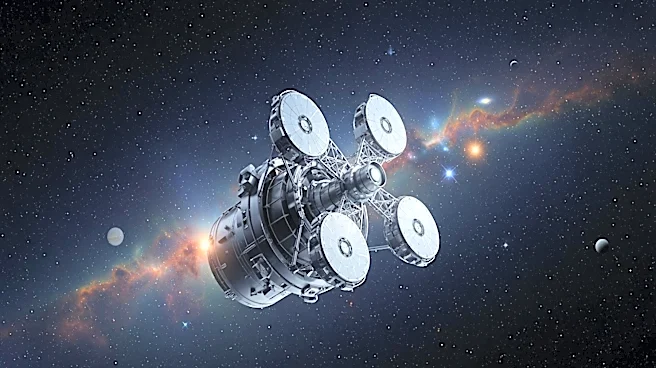
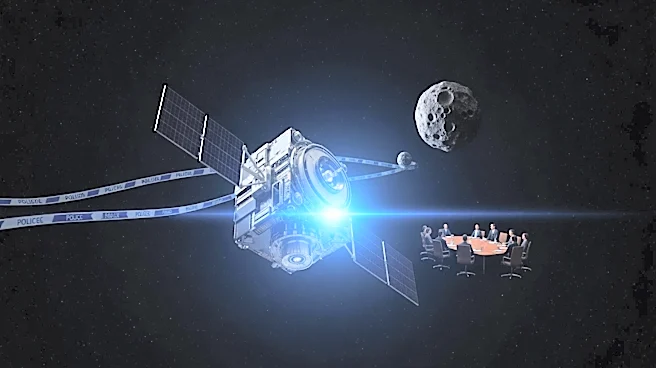
The European Space Agency (ESA) and the Japan Aerospace Exploration Agency (JAXA) have signed an agreement to launch the Rapid Apophis Mission for Space Safety (Ramses). This mission aims to study the near-Earth asteroid Apophis, which will pass close
to Earth in 2029. The collaboration marks a significant step in planetary defense, as the mission will provide crucial data to better understand and mitigate potential asteroid threats. ESA will oversee the spacecraft's design and operations, while JAXA will contribute key technologies, including solar arrays and an infrared imager. The mission is set to launch in 2028, with a rendezvous planned for April 2029.
Why It's Important?
This collaboration between ESA and JAXA underscores the importance of international cooperation in addressing global challenges like planetary defense. The Ramses mission will enhance our understanding of asteroid dynamics and inform future strategies to prevent potential impacts. The data collected will be vital for developing techniques to deflect hazardous asteroids, ensuring Earth's safety. This mission also highlights the role of space agencies in safeguarding our planet, setting a precedent for future international efforts in space safety.
What's Next?
The Ramses mission will lay the groundwork for future planetary defense strategies. The data gathered from Apophis will help refine asteroid deflection techniques and improve our ability to predict the trajectory of near-Earth objects. The mission will also contribute to ESA's broader Space Safety Programme, which focuses on tracking and mitigating risks from objects that come close to Earth. As space exploration advances, the need for robust planetary defense mechanisms will continue to grow.