

What's Happening?
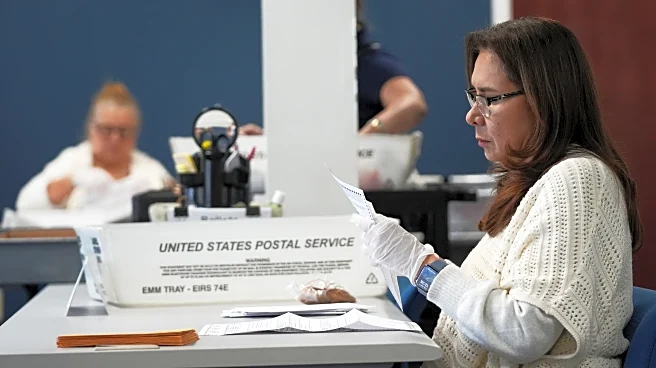
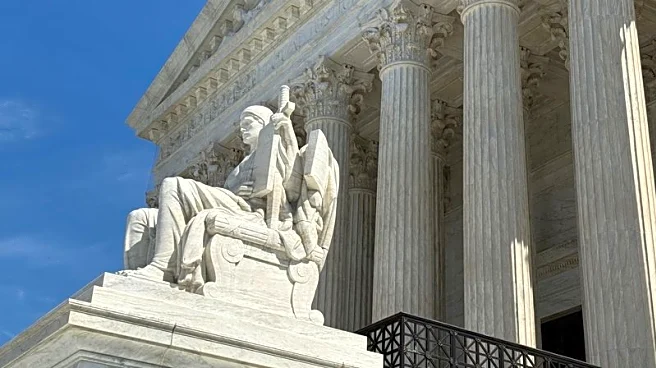
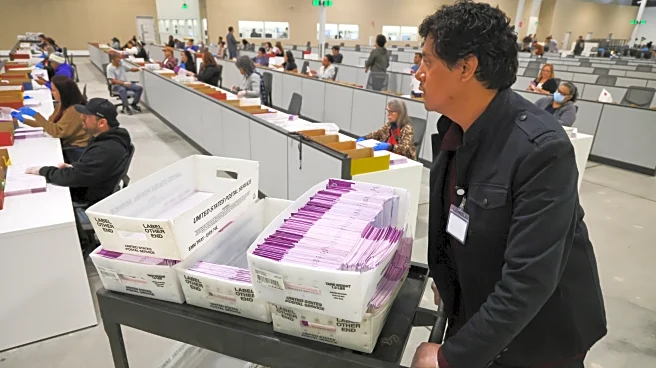
The U.S. Supreme Court is currently deliberating on a significant case concerning the legality of counting mail-in ballots that are postmarked by Election Day but arrive afterward. This case centers around a Mississippi law that permits such ballots to
be counted, a practice also followed by 13 other states. The legal debate is whether this practice conflicts with federal law, which designates Election Day as the Tuesday following the first Monday in November. The case has drawn attention due to President Trump's vocal opposition to mail-in voting, which he claims, without evidence, could lead to election fraud. The court's conservative justices, including Justices Samuel Alito and Brett Kavanaugh, have expressed concerns about the potential for fraud and the impact on public confidence in elections. Meanwhile, the court's liberal justices argue that states should have the autonomy to manage their election processes, as long as they adhere to federal guidelines.
Why It's Important?
The outcome of this Supreme Court case could have far-reaching implications for the administration of elections in the United States, particularly concerning mail-in voting. If the court rules against Mississippi's law, it could invalidate similar laws in other states, affecting how millions of mail-in ballots are handled. This decision could also influence the upcoming midterm elections, where control of Congress is at stake. The case highlights the ongoing national debate over election integrity and the balance between preventing fraud and ensuring voter access. A ruling that restricts the counting of late-arriving ballots could lead to significant changes in how states conduct elections, potentially reducing the flexibility that many states currently have in accommodating voters who rely on mail-in ballots.
What's Next?
The Supreme Court's decision is expected to set a precedent that will guide how states can manage mail-in voting in future elections. Depending on the ruling, states may need to revise their election laws to comply with new federal interpretations. This could lead to legislative battles at both the state and federal levels as lawmakers seek to align their election processes with the court's decision. Additionally, the ruling could prompt further legal challenges from political parties and advocacy groups, particularly if the decision is perceived to disadvantage certain voter demographics. The court's decision will likely be closely watched by election officials, political leaders, and voters across the country.