



What's Happening?
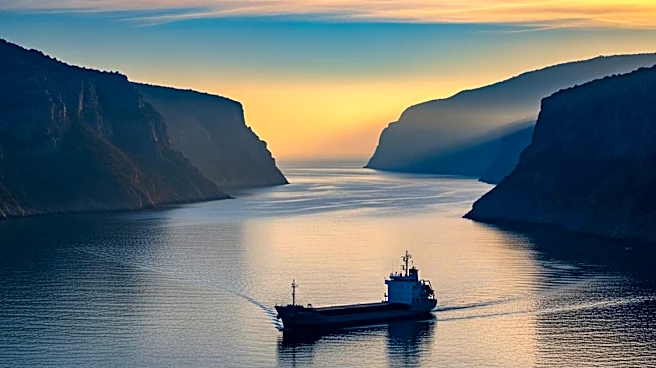
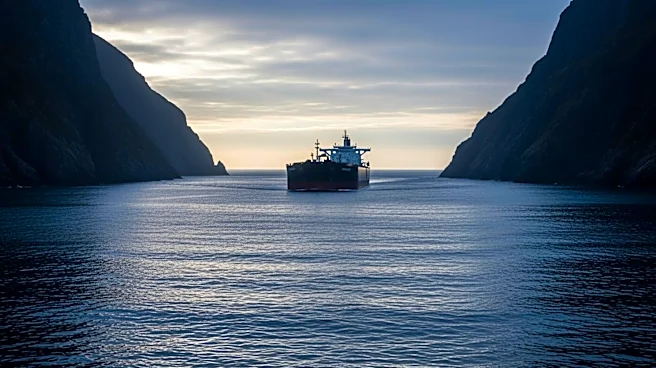
Iran has reversed its decision to open the Strait of Hormuz to commercial shipping, citing the ongoing U.S. blockade of its ports. The Fars News Agency reported that Iran's armed forces headquarters announced the reversal, stating that control of the strait
has returned to its previous state. The decision comes after Iran initially agreed to allow limited passage of oil tankers and commercial ships. However, Iran accuses the U.S. of breaching promises and committing piracy under the guise of a blockade. The strategic waterway remains under Iran's control, with passage allowed only under specific conditions set by Iran.
Why It's Important?
The Strait of Hormuz is a critical chokepoint for global oil transportation, and its closure or restricted access can have significant impacts on global energy markets and prices. Iran's control over the strait and its decision to reverse the opening highlights the ongoing geopolitical tensions between Iran and the U.S. The blockade and Iran's response could lead to further escalation, affecting international trade and security. The situation underscores the fragile nature of regional stability and the potential for conflict to disrupt global economic systems.
What's Next?
The reversal of the decision to open the Strait of Hormuz suggests that tensions between Iran and the U.S. are likely to persist. Diplomatic efforts may be necessary to resolve the blockade and ensure the free flow of commerce through the strait. The international community, including major oil-importing countries, will be closely monitoring the situation, as any disruption could have widespread economic consequences. Further negotiations or interventions may be required to prevent escalation and maintain stability in the region.