



What's Happening?
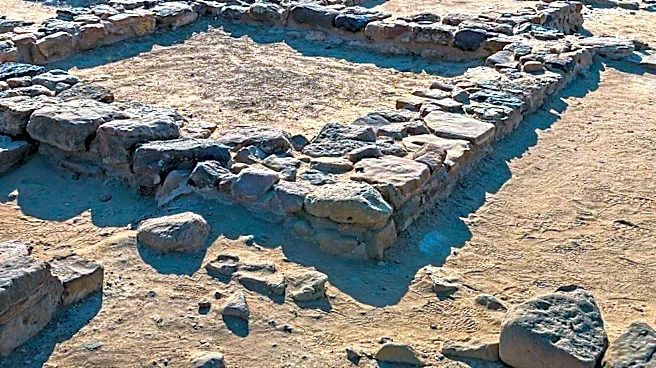
Archaeologists in Egypt have discovered an ancient settlement dating back to the Second Intermediate Period at the Tell el-Koua site in the Wadi Tumilat region. This site, which includes 10 mudbrick tombs, residential remains, and production facilities,
has been linked to the Hyksos period, a time of foreign rule in northern Egypt. The discovery includes scarab amulets, bronze tools, pottery, and human remains, suggesting the site was a well-integrated community. The find has reignited scholarly debates about the historical context of the biblical Exodus, as some scholars believe the Hyksos period may provide a backdrop for the biblical narrative.
Why It's Important?
The discovery is significant as it provides new insights into the Hyksos period, a pivotal era in Egyptian history. The findings could influence ongoing debates about the historical accuracy of the biblical Exodus, potentially reshaping our understanding of ancient Egyptian and biblical history. The artifacts and burial practices uncovered offer a glimpse into the daily life and cultural practices of the time, contributing to a broader understanding of ancient Egyptian civilization. This discovery also highlights the importance of archaeological research in uncovering historical truths and fostering cultural heritage preservation.