
What's Happening?
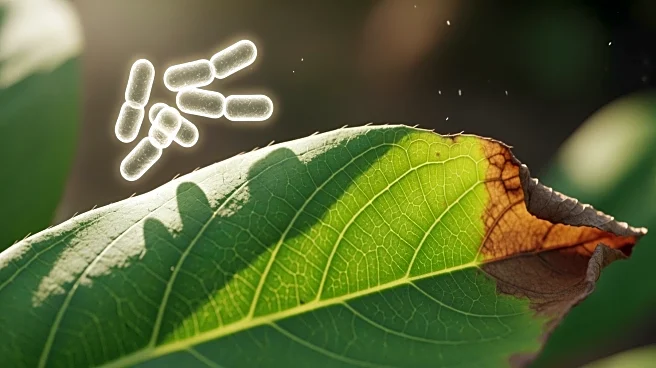
Researchers at the University of California, Davis, have identified the mechanism that makes the plant-wilting bacteria Ralstonia solanacearum so deadly. This bacterium, which can remain dormant in damp
soils for years, rapidly infects plants by spreading through their xylem vessels, causing them to wilt and die within days. The study, published in the Proceedings of the National Academy of Sciences, highlights the role of a secreted film made of exo polysaccharide 1 (EPS-1) that allows the bacteria to spread easily within the plant. The research was a collaborative effort between plant pathologists and engineers, who used precise measurements to understand the viscoelastic properties of the bacterial secretions. This discovery provides insights into the pathogenic nature of Ralstonia and offers a new experimental system for engineers and physicists to study.
Why It's Important?
The findings are significant for agriculture, as Ralstonia solanacearum affects a wide range of crops, including tomatoes and potatoes, leading to substantial economic losses. Understanding the mechanism of its pathogenicity could lead to the development of new strategies to combat this bacterium, potentially saving millions in crop losses. The research also bridges the gap between biology and engineering, offering a new perspective on how interdisciplinary approaches can solve complex biological problems. This could pave the way for innovative solutions in plant pathology and enhance food security by protecting vital crops from bacterial infections.