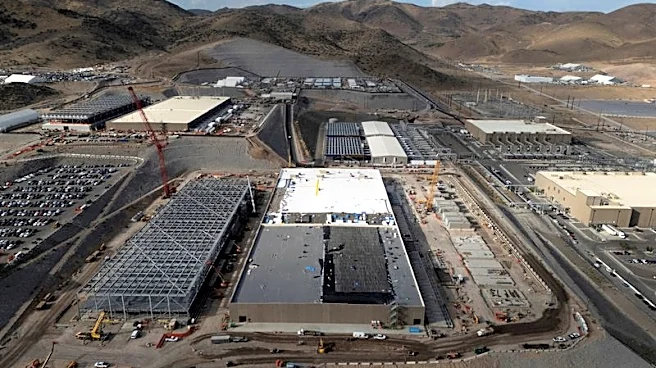







What's Happening?
Congressman Sam Liccardo (CA-16), alongside Representatives Nick Begich (AK-AL), Scott Peters (CA-50), and Erin Houchin (IN-09), has introduced the bipartisan Data Center Community Empowerment Act of 2026. This legislation aims to provide local, state,
and Tribal governments with the necessary tools and technical expertise to evaluate proposed data center projects. The bill seeks to establish a program within the Department of Energy (DOE) to offer technical assistance, develop a 'Data Center Community Toolkit,' and provide independent project analysis upon request. The initiative is designed to help communities understand the potential impacts of data centers on energy use, water supplies, infrastructure, and local economies, ensuring they can negotiate more effectively with developers. Companion legislation has already been introduced in the Senate by Senators John Curtis (R-UT) and Lisa Blunt Rochester (D-DE).
Why It's Important?
The rapid expansion of data centers across the U.S. presents both economic opportunities and significant challenges for local communities. These facilities are energy-intensive, require substantial water resources for cooling, and place demands on local infrastructure. Many local governments, particularly smaller towns, often lack the specialized technical expertise to thoroughly assess these complex projects or negotiate equitable terms with large 'hyperscaler' developers. This bill is crucial because it seeks to level the playing field, preventing communities from being 'steamrolled' by developers and ensuring that local priorities are respected. By empowering local leaders with independent information and analysis, the legislation aims to foster more informed decision-making, leading to development that genuinely benefits residents and aligns with community needs, rather than solely serving developer interests. This could mitigate potential negative impacts such as increased utility bills, environmental concerns, and strain on public services.
What's Next?
The Data Center Community Empowerment Act of 2026 will proceed through the legislative process in both the House and Senate, with companion legislation already introduced in the Senate. The next steps involve committee hearings, potential amendments, and votes in both chambers. If passed, the Department of Energy would be tasked with establishing the program, developing the toolkit, and setting up the independent project analysis service. Communities considering data center developments would then have access to these resources, potentially leading to more rigorous evaluations and negotiations with developers. The success of this legislation could influence future infrastructure development policies, particularly in sectors with high resource demands. Stakeholders, including local governments, environmental groups, and data center developers, will closely monitor its progress and implementation.
Beyond the Headlines
This legislation highlights a broader trend of increasing scrutiny on the environmental and social impacts of large-scale technological infrastructure. Beyond the immediate concerns of energy and water consumption, data centers raise questions about land use, noise pollution, and the long-term economic sustainability of communities that host them. The bill's emphasis on empowering local decision-making reflects a growing demand for greater local control in an era where national and global economic forces often dictate development. It also touches upon the ethical responsibility of large corporations to engage transparently and equitably with host communities. The success of this model could inspire similar legislative efforts in other sectors where local communities feel outmatched by powerful industries, fostering a more balanced approach to economic development that prioritizes community well-being alongside technological advancement.