







What's Happening?
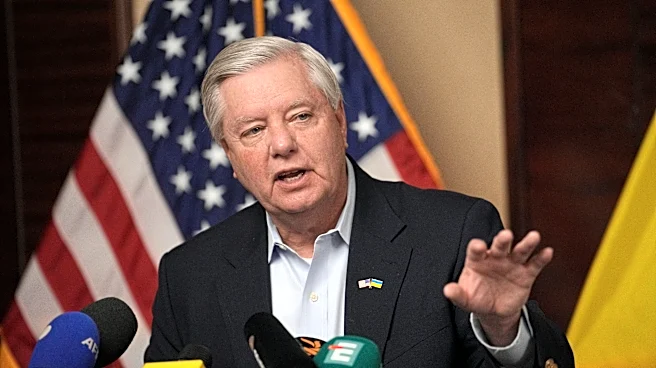
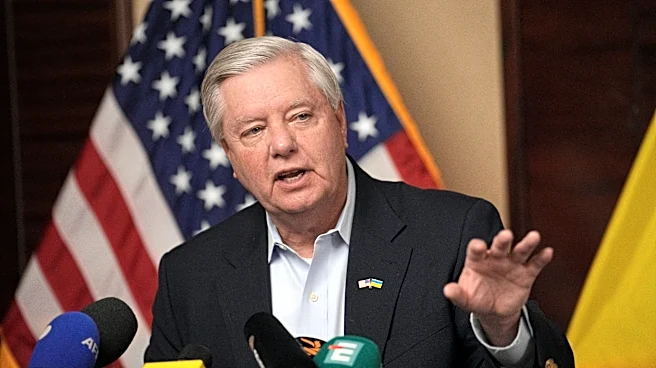
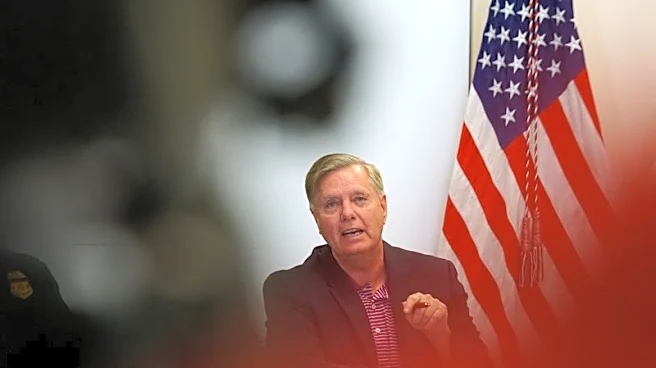
Lindsey Graham, the Republican senator from South Carolina, has died suddenly at the age of 71. Graham was a prominent figure in U.S. politics, known for his strong stance on foreign policy and his role in key Senate committees. He had recently returned
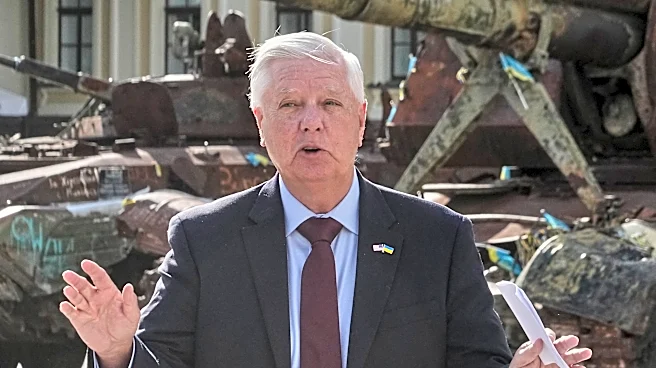
from his 10th visit to Kyiv, where he met with Ukrainian President Volodymyr Zelenskyy. Graham was a staunch advocate for U.S. power overseas and opposed Russian aggression, famously stating, 'Putin will not stop in Ukraine.' Throughout his four terms in the Senate, Graham was known for his pragmatic approach and ability to negotiate across party lines, despite his firm Republican beliefs. He was closely associated with figures like John McCain and Joe Lieberman, forming a trio known as the 'Three Amigos.' Graham's political career was marked by his initial opposition to President Trump, which later evolved into a complex relationship as he navigated the changing dynamics within the Republican Party.
Why It's Important?
Lindsey Graham's death marks the end of an era for a significant political figure who played a crucial role in shaping U.S. foreign policy and domestic politics. His influence extended across various domains, from military and foreign relations to judiciary matters. Graham's ability to work with both Republicans and Democrats made him a key player in legislative negotiations, impacting policies on climate change, immigration, and military spending. His passing leaves a void in the Senate, particularly in the committees he chaired, and raises questions about the future direction of U.S. foreign policy, especially regarding Ukraine and Russia. Graham's legacy also highlights the broader shifts within the Republican Party during the Trump era, reflecting the challenges of maintaining traditional conservative values while adapting to new political realities.
What's Next?
With Graham's passing, there will be a significant reshuffling within the Senate, particularly in the committees he chaired. His absence may lead to changes in the U.S. approach to foreign policy, especially concerning Ukraine and Russia. The Republican Party will need to address the leadership gap and determine who will take up Graham's mantle in advocating for strong U.S. military presence and foreign policy initiatives. Additionally, the upcoming elections will be closely watched to see how Graham's seat is filled and whether his successor will continue his legacy or chart a new course. The dynamics within the Senate may shift as both parties navigate the implications of Graham's death on legislative priorities and bipartisan cooperation.
Beyond the Headlines
Lindsey Graham's career reflects the broader cultural and political shifts in the U.S. over the past few decades. His journey from a critic of President Trump to a political ally underscores the complexities of party loyalty and the influence of personal relationships in politics. Graham's stance on issues like gun control, healthcare, and reproductive rights highlights the ongoing debates within the Republican Party about its core values and policy directions. His legacy also raises questions about the role of U.S. military power and interventionism in global affairs, as well as the ethical considerations of such policies. As the nation reflects on Graham's contributions, there will likely be discussions about the future of bipartisan cooperation and the evolving identity of the Republican Party in a post-Trump era.