






What's Happening?
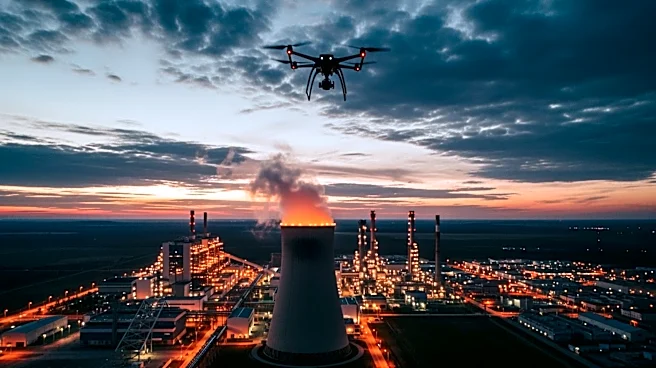
The Ukrainian military has denied Russian claims that a Ukrainian drone deliberately targeted the Zaporizhzhia nuclear plant, which is under Russian control. The incident reportedly involved a drone strike on the turbine hall of Power Unit No. 6, causing
a detonation but no significant damage to key equipment. Russia's state nuclear energy company, Rosatom, labeled the strike as deliberate, while Ukraine dismissed it as propaganda. The International Atomic Energy Agency (IAEA) has expressed concern and requested access to assess the site. This event is part of ongoing hostilities in the region, with Ukraine asserting its adherence to international humanitarian law.
Why It's Important?
The incident at the Zaporizhzhia nuclear plant highlights the precarious nature of nuclear safety in conflict zones. The plant, Europe's largest, is a critical infrastructure asset, and any damage could have severe environmental and humanitarian consequences. The situation underscores the broader risks of military engagements near nuclear facilities, raising alarms about potential nuclear accidents. The IAEA's involvement reflects international concern over nuclear safety and the need for stringent oversight. This development also illustrates the complex dynamics of the Ukraine-Russia conflict, where information warfare and military actions intertwine.
What's Next?
The IAEA's request to inspect the site may lead to increased international scrutiny and diplomatic efforts to ensure the plant's safety. Both Ukraine and Russia are likely to continue their strategic narratives, influencing international perceptions. The incident could prompt discussions on establishing safety protocols for nuclear sites in conflict zones. Additionally, the broader conflict dynamics may see further military engagements, with potential implications for regional stability and international relations.