







What's Happening?
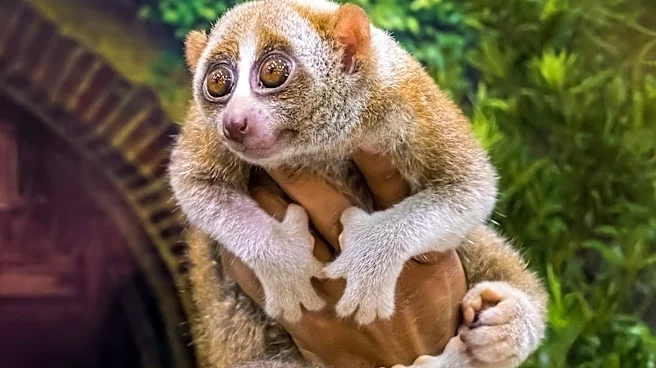
Social media platforms have become a significant marketplace for the wild animal pet trade, according to recent research by the Association of Zoos and Aquariums (AZA), the International Fund for Animal Welfare (IFAW), and the World Wildlife Fund (WWF).
The report, titled 'Primates for Purchase,' highlights the illegal online trade of primates in the U.S., revealing that traffickers exploit these platforms despite existing protections. The study found 1,614 primates listed for sale across major social media platforms in just six weeks. This issue is not confined to the U.S.; similar findings in Europe show that social media interactions, such as likes and shares, inadvertently promote the demand for wild animals as pets. The global wildlife trafficking market is estimated to be worth between $7 billion and $23 billion annually, making it one of the largest illicit markets worldwide.
Why It's Important?
The use of social media in wildlife trafficking has significant implications for conservation efforts and animal welfare. The ease of access to wild animals as pets through these platforms exacerbates the threat to species already under pressure from habitat destruction, climate change, and poaching. Nearly three-quarters of the world's primate species are threatened with extinction, and the pet trade is a major contributing factor. The decline in African grey parrot populations by 90% in some regions over the past 50 years illustrates the severe impact of this trade. The findings underscore the need for stricter enforcement of wildlife protection laws and increased public awareness to curb the demand for wild animals as pets.