


What's Happening?
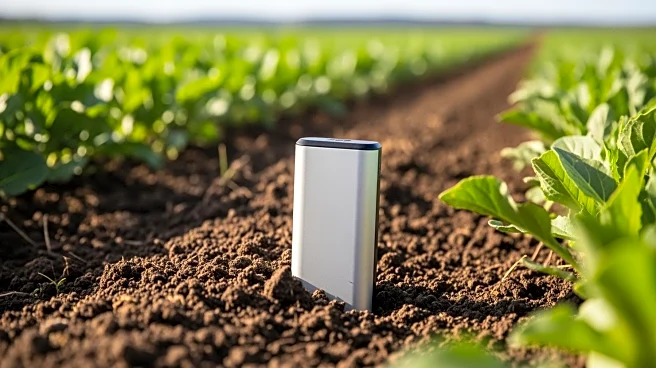
Researchers at Penn State have developed a low-cost sensor system to help farmers detect salt stress in crops early. This technology, described as an 'electronic nose,' identifies volatile organic compounds emitted by plants under stress. Soil salinity
affects nearly 30% of irrigated farmland in the U.S., reducing crop yields and profitability. The sensor system, using metal-oxide semiconductor sensors and machine learning, can detect stress patterns with up to 99.15% accuracy. The research, led by Ali Ahmad from the Polytechnic University of Valencia, involved controlled experiments with arugula plants to ensure accurate detection of salinity-induced stress.
Why It's Important?
The development of this sensor technology is crucial for U.S. agriculture, particularly in regions where soil salinity is a significant issue. By providing early detection of salt stress, farmers can take timely action to mitigate damage, potentially improving crop yields and farm profitability. This innovation supports precision agriculture, allowing for more efficient resource use and better crop management. As climate change and water management challenges persist, such technologies could play a vital role in sustaining agricultural productivity and food security.
What's Next?
The successful implementation of this sensor technology could lead to widespread adoption among farmers, particularly in areas prone to soil salinity. Further research and development may enhance the system's capabilities, potentially expanding its use to detect other types of plant stress. Collaboration with agricultural technology companies could facilitate commercialization and integration into existing farm management systems. As the technology becomes more accessible, it may drive advancements in sustainable farming practices and contribute to global efforts in combating agricultural challenges.