







What's Happening?
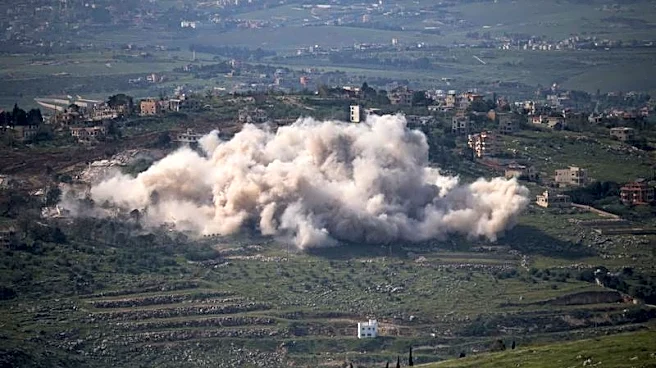
The Israeli security cabinet convened at army headquarters to address ongoing tensions with Iran and Hezbollah. Cabinet member Avi Dichter revealed that Israel's actions in Lebanon are limited by U.S. considerations, as the American government has linked
the Lebanese issue to the broader struggle against Iran's nuclear program. Despite repeated ceasefire violations by Hezbollah, Israel is not operating with the level of freedom it would prefer. Dichter emphasized the strategic necessity of aligning with the U.S. to address the Iranian nuclear threat, which he described as the number one interest. This meeting underscores the complex decision-making constraints shaping Israel's conduct on its northern front.
Why It's Important?
The constraints on Israel's actions in Lebanon highlight the significant influence of U.S. foreign policy on Israeli military strategy. The U.S. linkage of Lebanese and Iranian issues suggests a broader geopolitical strategy aimed at curbing Iran's nuclear ambitions. This alignment with the U.S. is crucial for Israel, as it seeks to maintain strong bilateral relations and leverage American support in its regional security efforts. However, the limitations imposed by this partnership may affect Israel's ability to respond to immediate threats from Hezbollah, potentially impacting the security of northern Israeli communities.
What's Next?
Israel may continue to face challenges in balancing its security needs with diplomatic considerations tied to U.S. relations. The security cabinet's decisions will likely influence future military and diplomatic strategies, particularly in how Israel addresses threats from Hezbollah while maintaining its strategic partnership with the U.S. The situation may also prompt further discussions between Israeli and American officials to align their approaches to regional security issues.