



What's Happening?
Dr. Parvinder Singh Gahlaut, Managing Director of Indian Potash Limited, is spearheading efforts to integrate Artificial Intelligence (AI) and Climate-Smart Agriculture (CSA) into Indian farming practices. The initiative aims to address the environmental
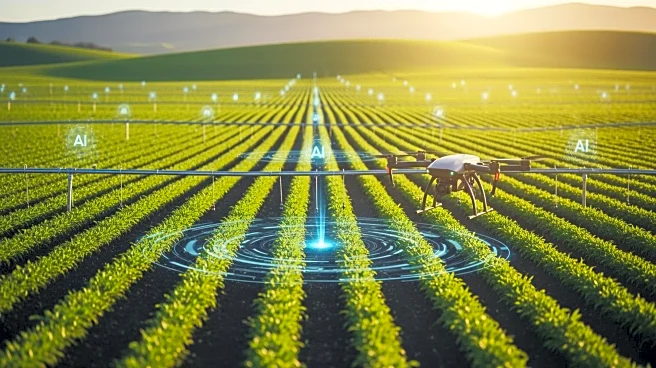
impact of traditional agriculture, which contributes significantly to greenhouse gas emissions. By adopting AI technologies, such as drone farming, and promoting CSA practices, the goal is to enhance agricultural productivity while reducing environmental harm. Drones equipped with advanced sensors are being used to monitor crop health and optimize resource use, potentially reducing chemical usage by up to 30%. Additionally, the IPL Farmer Samvad app has been introduced to provide farmers with access to modern farming techniques, market information, and government schemes, thereby empowering them to make informed decisions.
Why It's Important?
The integration of AI and CSA in agriculture is crucial for addressing the dual challenges of food security and climate change. By reducing reliance on harmful pesticides and optimizing resource use, these technologies can help mitigate the environmental impact of farming. This transformation is particularly significant for India, a major agricultural nation, as it seeks to maintain its global standing in food production while adapting to climate variability. The initiative also supports the economic well-being of farmers by lowering input costs and enhancing crop resilience, thereby safeguarding livelihoods against climate risks. The broader adoption of these practices could serve as a model for sustainable agriculture worldwide.
What's Next?
Indian Potash Limited plans to expand access to AI solutions and digital advisory systems to over 15 million farmers by 2030. This expansion includes developing drought-resilient fertilizers and regenerative farming models to further support India's climate goals. The success of these initiatives could lead to widespread adoption of sustainable farming practices across the country, potentially influencing global agricultural policies. Continued investment in farmer training and resource-sharing networks will be essential to scaling these innovations effectively.
Beyond the Headlines
The shift towards AI and CSA in agriculture represents a broader movement towards sustainable development. It highlights the potential for technology to drive environmental and economic progress simultaneously. This approach not only addresses immediate agricultural challenges but also contributes to long-term ecological balance and food security. The emphasis on capacity building and cooperative networks underscores the importance of community engagement in achieving sustainable growth.