


What's Happening?
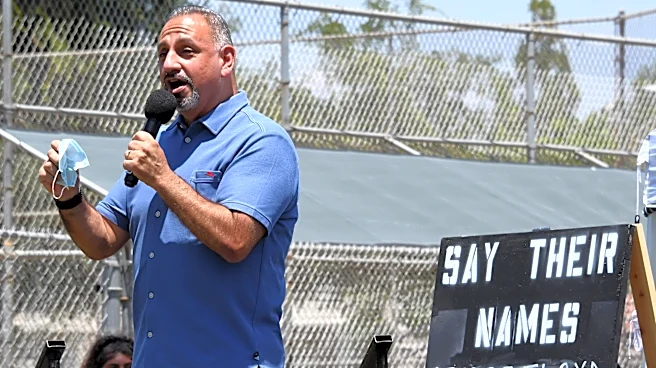
The city of Charlotte has agreed to a $1.725 million settlement in a 2021 class-action lawsuit filed by 67 individuals who participated in George Floyd protests. The lawsuit alleged that Charlotte-Mecklenburg Police officers trapped protesters in a confined
uptown area and then used tear gas and pepper balls against them. Each of the 67 protesters will receive $25,746 as part of the settlement. The City Council approved this resolution in a closed session. While the city stated that the resolution avoids the significant expense and uncertainty of prolonged trial proceedings, it explicitly does not constitute an admission of liability or wrongdoing by either the City or the Charlotte-Mecklenburg Police Department.
Why It's Important?
This settlement is significant as it addresses claims of police misconduct during protests, a recurring issue in the U.S. following the death of George Floyd. The payment of $1.725 million to protesters, despite the city not admitting liability, highlights the financial and reputational risks faced by municipalities in such legal battles. It could influence how other cities handle similar class-action lawsuits stemming from protest-related incidents, potentially encouraging settlements to avoid lengthy and costly trials. For the affected individuals, the settlement provides a measure of compensation for their alleged experiences. This outcome also underscores the ongoing scrutiny of police tactics during public demonstrations and the legal avenues available to citizens who believe their rights have been violated.
What's Next?
The immediate next step is the distribution of the settlement funds, with each of the 67 protesters receiving $25,746. While the city has not admitted wrongdoing, this settlement may prompt internal reviews or discussions within the Charlotte-Mecklenburg Police Department regarding crowd control tactics and engagement with protesters. Other cities facing similar lawsuits might look to Charlotte's decision as a precedent, potentially leading to more out-of-court settlements to mitigate financial and public relations damage. The resolution of this lawsuit could also encourage further legal actions from individuals or groups who experienced similar situations during the 2020 protests across the nation.
Beyond the Headlines
The settlement, even without an admission of liability, contributes to a broader national conversation about police accountability and the rights of protesters. It reflects the complex legal and ethical challenges cities face when balancing public order with constitutional rights during periods of civil unrest. The use of tactics like 'kettling' (herding protesters into confined areas) and chemical agents has been a point of contention in many cities, raising questions about appropriate force and de-escalation strategies. This case, therefore, extends beyond a simple financial transaction, touching upon the evolving standards of policing in a democratic society and the ongoing efforts to address systemic issues related to law enforcement and civil liberties.