







What's Happening?
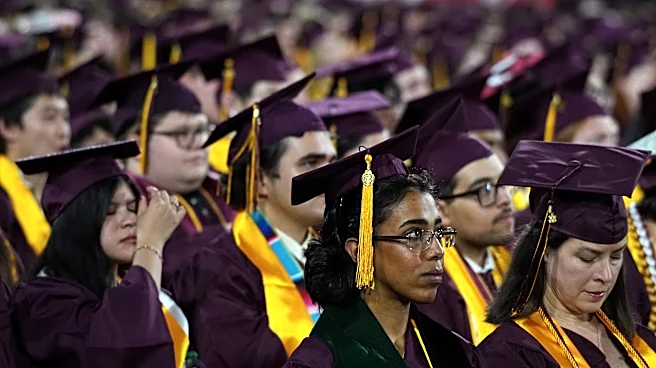
A study by the National Bureau of Economic Research highlights a significant shift in marriage prospects for college-educated women in the U.S. The research indicates that there are 1.6 million more women than men attending four-year colleges, leading
to a reduced pool of college-educated men for women to marry. Historically, women had a larger selection of college-educated men, but current trends show a reversal. This has resulted in college-educated women increasingly marrying high-earning men without degrees, which in turn limits the options for non-college-educated women. The study suggests that deteriorating educational outcomes for men are primarily affecting the marriage prospects of non-college women.
Why It's Important?
The findings of this study have broader implications for societal and economic structures in the U.S. The imbalance in educational attainment between genders could lead to long-term effects on marriage rates and financial stability for millennials and Gen Z. As more women pursue higher education, the traditional marriage market dynamics are shifting, potentially leading to a higher number of single women. This trend could exacerbate existing financial challenges, as single women generally earn less and face higher healthcare costs. The study suggests that if these trends continue, there could be a looming retirement crisis for women, who already retire with significantly less savings than men.