









What's Happening?
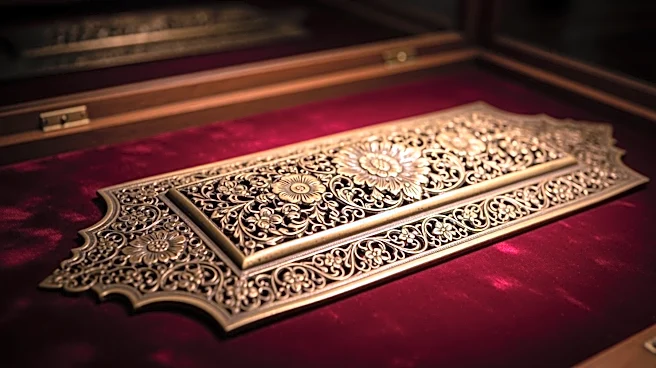
The silver coffin plate of Caroline of Brunswick, known as 'the injured Queen of England,' is set to be displayed at the Treasure House Fair in London. The plate, engraved with Caroline's chosen epitaph, was involved in a historical controversy during
her funeral in 1821. It was repeatedly removed and replaced with an official version by the King's representatives. The plate, crafted by silversmith Paul Storr, is valued at £75,000 and will be sold by historian Martyn Downer. Caroline's tumultuous marriage to George IV and her subsequent treatment became a symbol of opposition to the monarchy, drawing public attention and sympathy.
Why It's Important?
The sale of Caroline's coffin plate offers a tangible connection to a significant historical event, reflecting the complex dynamics of royal marriages and public sentiment in the early 19th century. Caroline's story highlights issues of gender, power, and public perception within the monarchy. The plate's history, including its removal and replacement during her funeral, underscores the political tensions of the time. This event provides an opportunity for historical reflection and discussion about the role of royal figures in shaping national identity and public discourse.
Beyond the Headlines
The coffin plate's journey from a historical artifact to a marketable item raises questions about the commercialization of royal memorabilia and its impact on cultural heritage. The story of Caroline's marriage and funeral reflects broader themes of personal agency and resistance against institutional power. The plate's sale at a prestigious fair also highlights the ongoing interest in royal history and its influence on contemporary culture. This event may inspire further exploration of similar artifacts and their stories, contributing to a deeper understanding of historical narratives.