




What's Happening?
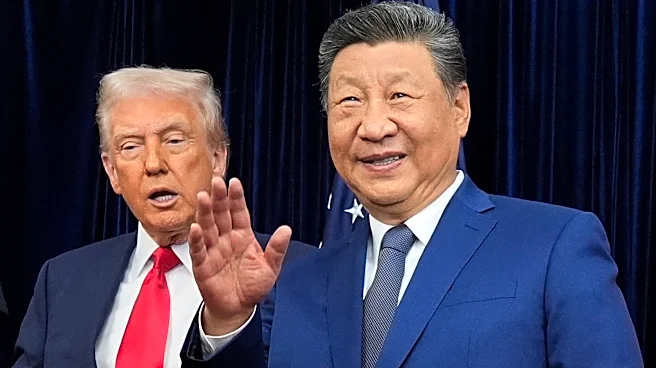
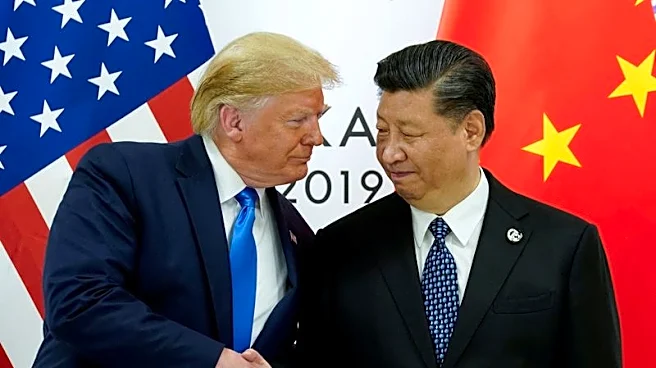
President Donald Trump and Chinese President Xi Jinping are set to meet for a summit aimed at addressing several critical issues affecting U.S.-China relations. The summit will focus on trade tensions, the status of Taiwan, and the ongoing conflict in Iran.
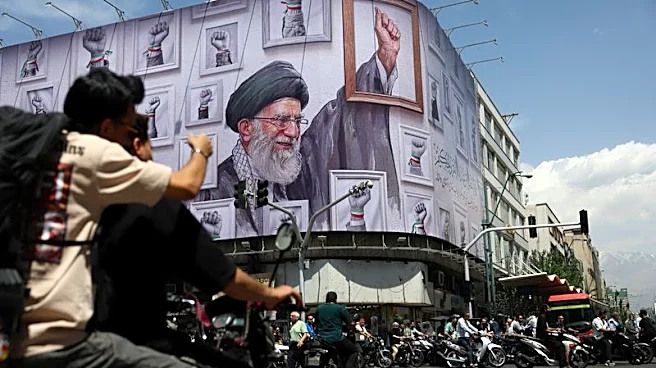
Despite recent stability in bilateral ties, significant challenges remain, including the unresolved trade war initiated during Trump's first term, which saw tariffs as high as 145% on Chinese goods. Although a trade truce was established, allowing for some economic relief, underlying issues persist. Additionally, the U.S. has imposed restrictions on the export of advanced computer chips to China, a move that has prompted China to bolster its domestic chip industry. Taiwan remains a contentious topic, with China viewing it as a major risk to U.S.-China relations. The U.S. maintains a policy of strategic ambiguity regarding Taiwan's defense, further complicating the situation. The summit will also address the war in Iran, with the U.S. urging China to leverage its influence over Iran to help resolve the conflict.
Why It's Important?
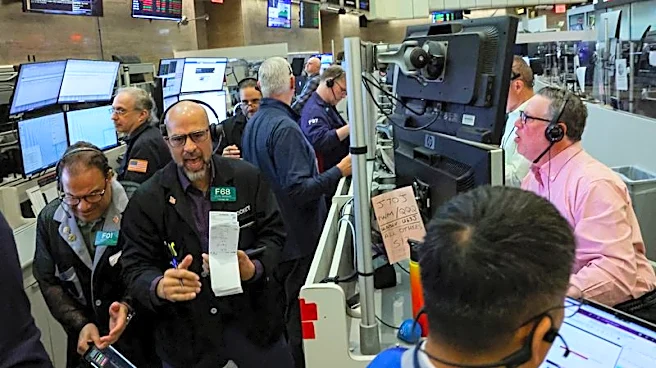
The outcomes of the Trump-Xi summit could have significant implications for global economic stability and geopolitical dynamics. A comprehensive trade agreement could ease tensions and provide economic relief to industries affected by tariffs. However, the persistence of trade barriers and export restrictions could drive China to accelerate its technological self-reliance, potentially altering global supply chains. The Taiwan issue remains a flashpoint, with potential military and diplomatic repercussions if not managed carefully. The U.S.'s strategic ambiguity on Taiwan's defense adds complexity to the situation, impacting regional security. Additionally, China's role in the Iran conflict could influence global energy markets and diplomatic relations, particularly if China takes a more active role in mediating the situation. The summit's outcomes could shape U.S.-China relations and have broader implications for international trade and security.
What's Next?
Following the summit, both nations may announce a continuation of the trade truce, though a comprehensive resolution to the trade war is unlikely. Discussions on creating a 'Board of Trade' to facilitate ongoing economic dialogue may be pursued. On Taiwan, the possibility of reciprocal restraint, such as reducing U.S. arms sales in exchange for fewer Chinese military exercises, could be explored. Regarding Iran, the U.S. will likely continue to pressure China to use its influence to encourage Iran to open the Strait of Hormuz, a critical passage for global oil shipments. The summit's outcomes will be closely watched by international stakeholders, with potential reactions from political leaders, businesses, and civil society groups shaping future diplomatic and economic engagements.