




What's Happening?
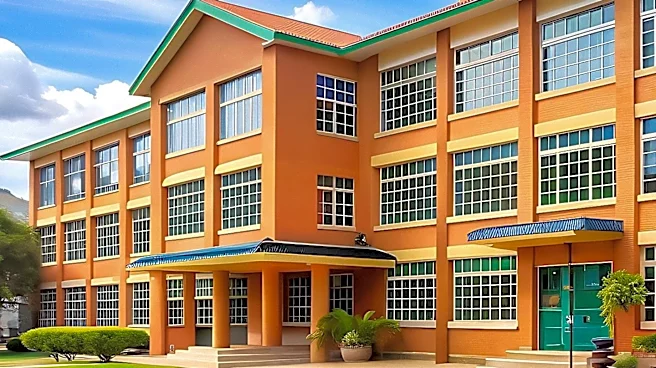
Descendants of Navajo Code Talkers are expressing strong criticism regarding New Mexico's new plan for a museum dedicated to their fathers' contributions during World War II. The state, in collaboration with Navajo Preparatory School, intends to build
a scaled-down version of the museum on the school's campus in Farmington, New Mexico. This location is outside the Navajo Nation boundary and approximately two hours northeast of Tse Bonito, where a 200-acre land donation for a museum was made in 2009. Critics, including Zonnie Gorman, daughter of original Code Talker Carl N. Gorman, and Laura Tohe, daughter of Code Talker Benson Tohe, argue that the new plan was developed without adequate consultation with descendants and that the Farmington location is problematic due to its history of social injustice against Indigenous people. The state has allocated $20 million for the project, with a groundbreaking planned for December, but descendants are questioning the scope, location, and the lack of their involvement in the decision-making process. State lawmakers have also scrutinized the project during an Indian Affairs Committee meeting, raising concerns about the use of funds and ownership.
Why It's Important?
This situation highlights significant issues concerning cultural preservation, Indigenous sovereignty, and the appropriate recognition of historical contributions. The Navajo Code Talkers played a crucial role in securing Allied victory in World War II, and their legacy is a source of immense pride and historical importance. The controversy over the museum's location and the perceived lack of consultation with descendants could undermine the very purpose of honoring these heroes. Building the museum outside the Navajo Nation, particularly in a location with a contentious history for Indigenous people, risks alienating the community most directly connected to the Code Talkers. Furthermore, the dispute raises questions about how state governments collaborate with Indigenous communities on projects of cultural significance, emphasizing the need for genuine partnership and respect for self-determination. The outcome of this debate could set a precedent for future cultural heritage projects involving Indigenous groups and state entities, influencing how historical narratives are preserved and presented.
What's Next?
Despite the objections, the museum project is moving forward with a groundbreaking scheduled for December. Descendants like Zonnie Gorman and Laura Tohe have met with state officials and Navajo Prep administrators to voice their concerns and propose compromises, such as re-designating the facility as a Diné bizaad (Navajo language) program space with a Code Talker exhibition, rather than a full museum. While some of their suggestions, such as the inclusion of a Diné bizaad institute and a student leadership program, appear to have been incorporated, they have not received a formal response to their broader proposals. State lawmakers are expected to continue scrutinizing the project's administrative details, funding, and ownership. The state will own the project during construction and for the initial years of operation, with eventual transfer to Navajo Prep. Another Code Talker group is reportedly still pursuing the original Tse Bonito museum plan, suggesting a potential for parallel or competing efforts. The ongoing dialogue and potential for further legislative or community action will determine the final form and acceptance of the museum.
Beyond the Headlines
The controversy surrounding the Navajo Code Talkers museum extends beyond a simple disagreement over location; it touches upon deeper issues of historical interpretation, cultural ownership, and the ongoing struggle for Indigenous self-determination. The descendants' concerns about the 'superficial' popular narrative of the Code Talkers underscore the importance of authentic representation and the need to move beyond simplistic portrayals that can perpetuate stereotypes. The debate also highlights the complexities of state-tribal relations, particularly when state funding and initiatives intersect with Indigenous cultural heritage. The question of who controls the narrative and physical space dedicated to such a significant historical group is central. The choice of Farmington, a site associated with historical injustices, adds a layer of ethical complexity, raising questions about reconciliation and the symbolic power of location. This situation could serve as a critical case study for how public institutions can better engage with Indigenous communities to ensure that historical projects are not only well-funded but also culturally appropriate, respectful, and genuinely representative of the communities they aim to honor.