






What's Happening?
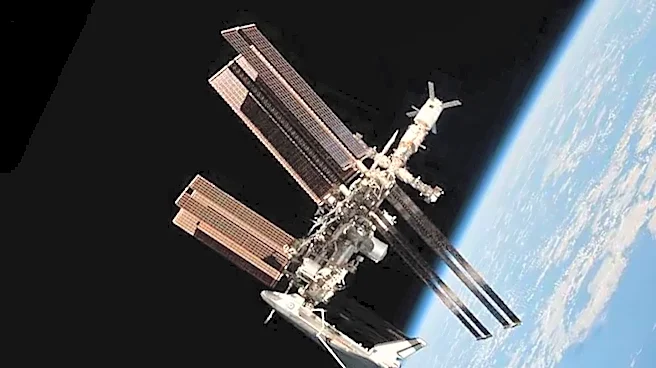
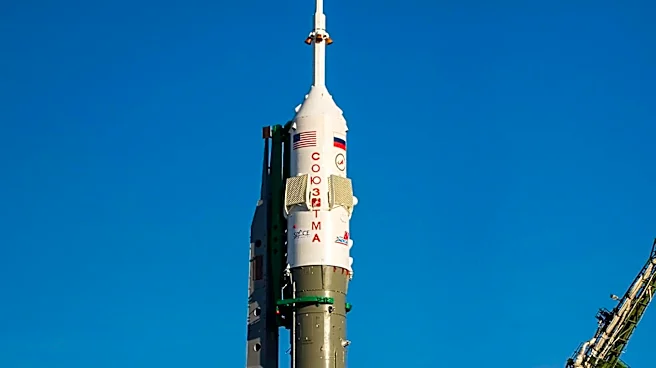
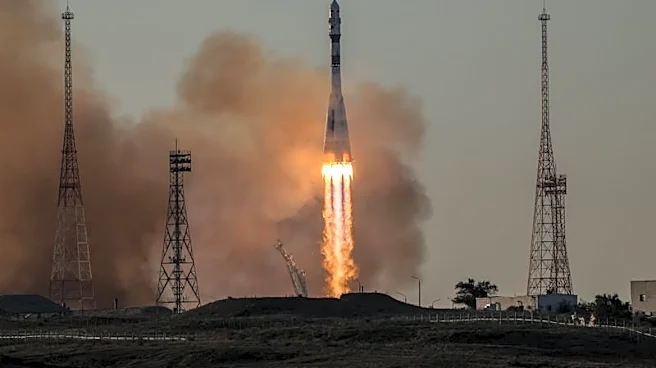
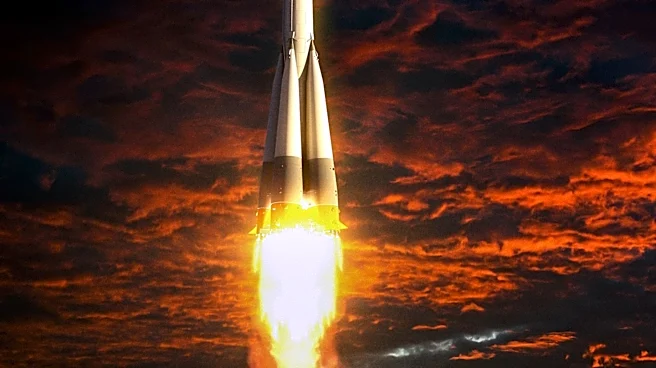
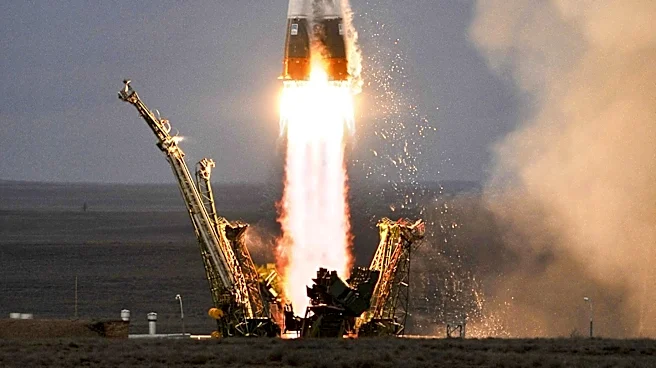
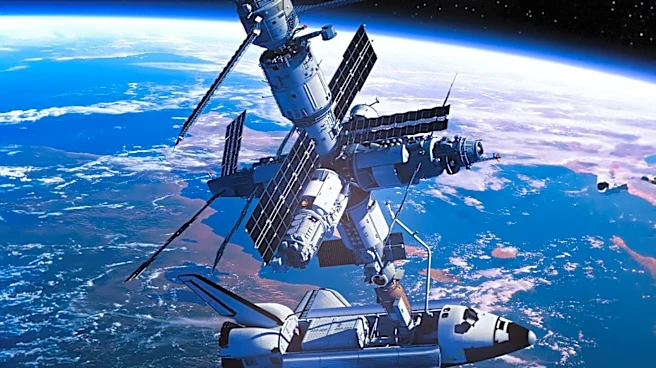
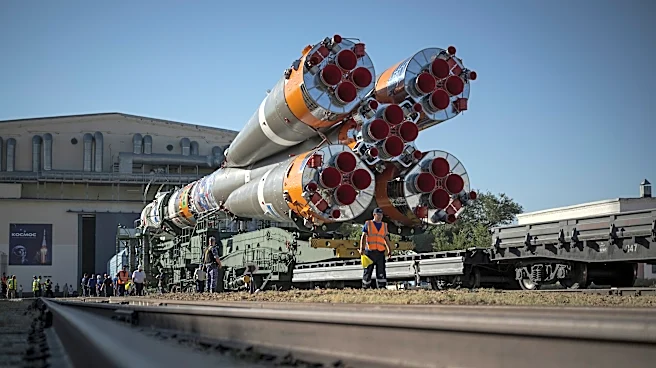
NASA astronaut Anil Menon, along with Russian cosmonauts Pyotr Dubrov and Anna Kikina, successfully launched to the International Space Station (ISS) aboard a Russian Soyuz rocket. The launch took place from the Baikonur Cosmodrome in Kazakhstan at 10:47
a.m. EDT on July 14. The Soyuz MS-29 spacecraft executed a series of separations and orbital insertions, setting the crew on a course to dock with the ISS after two orbits. This mission marks Menon's first spaceflight, having been selected as a NASA astronaut candidate in December 2021. The crew is expected to dock with the ISS at approximately 1:56 p.m. EDT, joining the seven astronauts currently aboard the station.
Why It's Important?
This mission underscores the ongoing collaboration between NASA and Roscosmos, despite geopolitical tensions. The inclusion of a NASA astronaut on a Russian spacecraft highlights the importance of international partnerships in space exploration. The mission also contributes to scientific research on the ISS, with Menon set to conduct experiments that could advance semiconductor production and medical technologies. The successful launch and docking are crucial for maintaining the ISS's operational capabilities and supporting its scientific agenda. The mission also represents a significant milestone for Menon, who transitions from a SpaceX flight surgeon to an active astronaut.
What's Next?
The MS-29 crew will spend approximately eight months aboard the ISS, engaging in various scientific experiments and maintenance activities. Menon will focus on research that could enhance in-space production of semiconductor crystals and develop medical procedures using augmented reality and artificial intelligence. These advancements could have significant implications for future space missions, potentially reducing the need for Earth-based medical support. The mission's success may also influence future collaborations between NASA and Roscosmos, as well as the broader international space community.