







What's Happening?
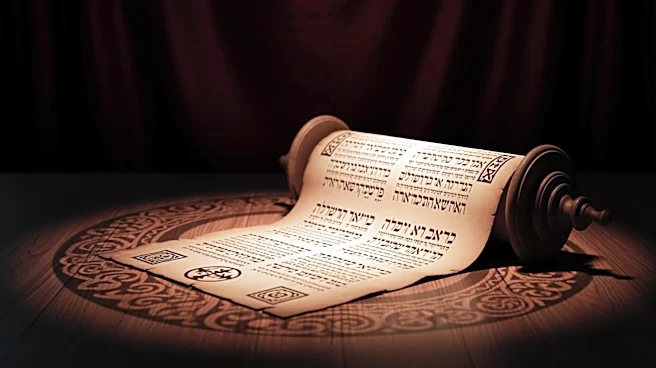
The ANU Museum of the Jewish People in Tel Aviv has unveiled a rare medieval Sephardi Torah scroll, dating back to the late 13th or early 14th century. This scroll, originating from Spain, is one of only five known early Spanish Torah scrolls. It includes
chapters 28-33 of the Book of Genesis and showcases unique scribal traditions, such as 'unusual letters,' which carry interpretive and mystical meanings. These traditions, once prevalent, have largely faded as Torah writing became standardized. The scroll, which shows signs of long use and repairs, was eventually deemed unfit for ritual use and disassembled, with only some leaves surviving. The display is part of the museum's permanent exhibition and is on loan from the Feld Family Collection.
Why It's Important?
The exhibition of this rare Torah scroll is significant as it provides a tangible connection to the rich cultural and spiritual heritage of Spanish Jewry before the 1492 expulsion. It highlights the historical continuity and resilience of Jewish traditions, offering insights into the spiritual and interpretive practices of the time. For the ANU Museum, this display underscores the Torah's role as a central element of Jewish identity and creativity across generations. It also serves as a reminder of the cultural losses incurred during periods of persecution, while celebrating the survival and transmission of Jewish heritage.