



What's Happening?
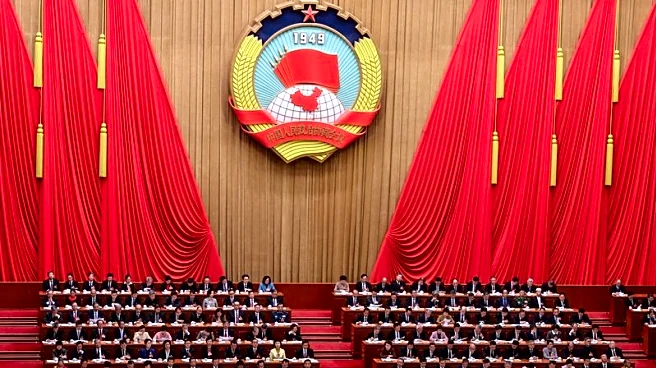
China has announced its lowest economic growth target since 1991, setting a goal of 4.5% to 5% for 2026. This decision was made during the opening of its annual national congress, reflecting a pragmatic approach in response to a weak domestic economy.
The country is facing challenges such as a property sector slump, declining home prices, weakened domestic consumption, and massive job losses. In response, Chinese officials have pledged to stabilize the housing market and boost domestic consumption. Additionally, China aims to achieve technological self-reliance, with plans to advance in areas like artificial intelligence and robotics. The congress is expected to approve a five-year plan that outlines these priorities.
Why It's Important?
The setting of a lower economic growth target by China is significant as it indicates the country's acknowledgment of its current economic challenges. This move could impact global markets, especially given China's role as a major economic player. The focus on technological self-reliance highlights the ongoing rivalry with the United States, potentially affecting international trade and technology sectors. Furthermore, China's efforts to stabilize its housing market and boost domestic consumption are crucial for its economic recovery, which could influence global economic trends. The emphasis on reducing carbon emissions and encouraging births also reflects China's long-term strategic priorities.
What's Next?
China's national congress is expected to approve the five-year plan, which will guide the country's economic and political policies until 2030. The plan includes goals for technological advancements and military budget growth. As China pursues technological self-reliance, it may lead to increased competition with the United States in sectors like artificial intelligence and semiconductors. The focus on climate targets and demographic policies could also result in new initiatives aimed at reducing carbon emissions and encouraging population growth. These developments may prompt reactions from international stakeholders, including governments and businesses.
Beyond the Headlines
China's demographic crisis, characterized by an aging population and declining birth rates, poses long-term challenges for its economic growth. The government's commitment to building a 'fertility-friendly society' indicates a strategic shift to address these issues. Additionally, China's climate targets reflect its role as a global leader in renewable energy, which could influence international climate policies. The emphasis on military readiness and budget growth suggests a focus on national security amid regional tensions. These factors highlight the complex interplay between domestic priorities and international relations in shaping China's future.