




What's Happening?
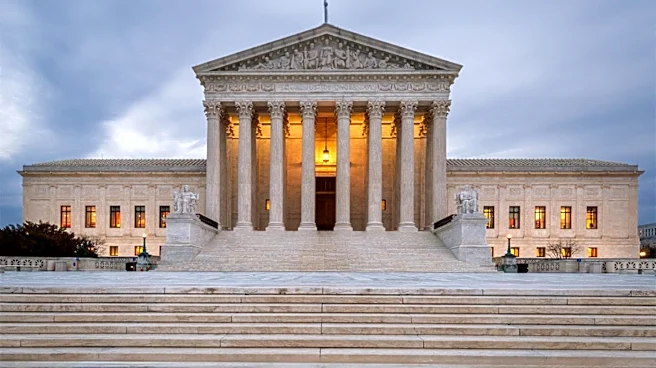
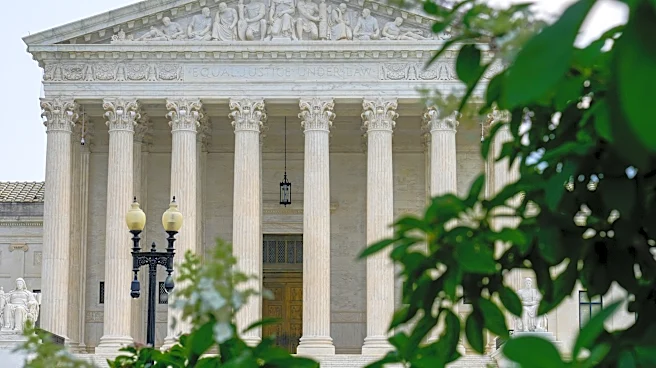
Supreme Court Justice Amy Coney Barrett recently participated in an interview at the LBJ Library, where she discussed her book 'Listening To The Law' and the increasing use of shadow dockets by the Supreme Court. Shadow dockets, or emergency dockets, are
cases that require swift decisions without the full briefing and oral arguments typical of regular cases. Justice Barrett emphasized the importance of these dockets in handling urgent legal matters, despite the lack of detailed opinions that accompany them. She also addressed the declining public trust in the Supreme Court, urging Americans to maintain faith in democratic institutions. Barrett highlighted the court's role in making interim decisions that are not final adjudications, explaining that these decisions are based on a fair prospect of success and other factors like irreparable harm.
Why It's Important?
The rise of shadow dockets is significant as it reflects a shift in how the Supreme Court handles urgent legal matters, potentially impacting public perception of judicial transparency and accountability. These dockets allow the court to address pressing issues quickly, but the lack of detailed opinions can lead to concerns about the court's decision-making process. Justice Barrett's comments on public trust are crucial, as confidence in the judiciary is vital for the functioning of democracy. The court's ability to maintain its legitimacy and authority depends on public perception, making Barrett's call for trust in democratic institutions particularly relevant.
What's Next?
Justice Barrett's discussion suggests that the Supreme Court will continue to rely on shadow dockets to manage urgent cases. This approach may prompt further debate about the balance between judicial efficiency and transparency. As public trust in the judiciary remains a concern, the court may face increased scrutiny over its use of shadow dockets and the implications for legal precedent and public confidence. Future discussions and potential reforms could focus on enhancing transparency and understanding of the court's interim decisions.