
What's Happening?
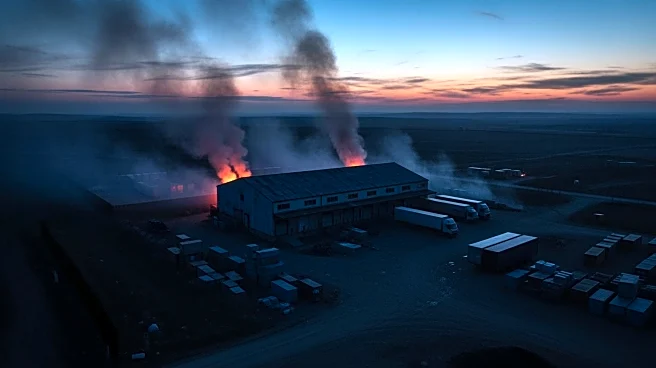
Thailand has conducted airstrikes on a logistics center near the Cambodian town of Poipet, a major casino hub and the largest land crossing between the two countries. The Thai military targeted a facility
reportedly used to store BM-21 rockets, following a series of border clashes that have escalated tensions between Thailand and Cambodia. The conflict, which began with a Cambodian rocket barrage into Thailand, has resulted in at least 21 Thai and 17 Cambodian casualties, and displaced approximately 800,000 people. Despite a ceasefire agreement brokered by Malaysian Prime Minister Anwar Ibrahim and U.S. President Donald Trump, hostilities have resumed, with both nations blaming each other for reigniting the conflict.
Why It's Important?
The renewed hostilities between Thailand and Cambodia have significant implications for regional stability in Southeast Asia. The conflict disrupts trade and travel, particularly affecting the Poipet area, a key economic zone due to its casinos and border crossing. The displacement of hundreds of thousands of people poses a humanitarian challenge, potentially straining resources and international relations. The involvement of international figures like President Trump highlights the global interest in maintaining peace in the region, as continued conflict could impact broader geopolitical dynamics and economic negotiations.
What's Next?
The situation remains volatile, with both countries likely to continue military engagements unless a new ceasefire can be effectively enforced. International diplomatic efforts may intensify to prevent further escalation, with potential involvement from ASEAN and other regional bodies. The humanitarian impact will require coordinated relief efforts, and the economic repercussions could prompt businesses and investors to reassess their positions in the region. Monitoring the response from global powers, particularly the U.S., will be crucial in understanding the future trajectory of this conflict.