








What's Happening?
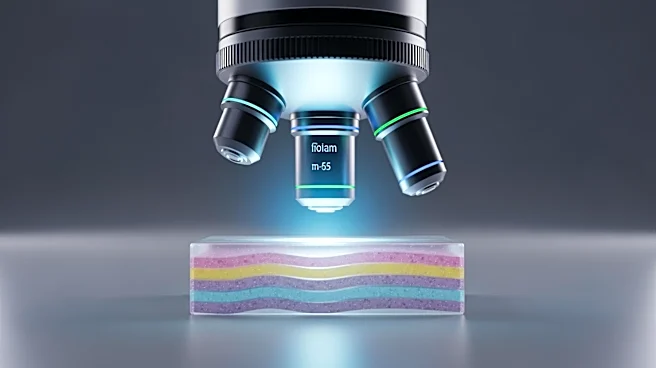
A team led by Professor Raju Tomer at Columbia University has developed a new 3D microscope technology that captures high-resolution images of tissues at a fraction of the cost of existing systems. The innovation, known as HySIL (Hybrid Solid–Liquid Optics),
combines a simple solid lens with a matched immersion liquid, allowing for high-resolution imaging across large tissue samples. This breakthrough addresses the limitations of traditional microscopy, which often requires expensive lenses and specific sample preparations. The technology is expected to enhance research capabilities in fields such as neuroscience, cancer research, and pathology.
Why It's Important?
The development of HySIL technology represents a significant advancement in the field of microscopy, making high-resolution 3D imaging more accessible and affordable. This could have profound implications for medical research and diagnostics, enabling more detailed analysis of tissues and potentially improving disease detection and treatment. By reducing costs and complexity, the technology could democratize access to advanced imaging tools, benefiting research institutions and clinics with limited resources. The ability to integrate this technology with existing microscopes further enhances its potential impact across various scientific disciplines.
Beyond the Headlines
The introduction of HySIL technology could lead to a paradigm shift in how biological and medical research is conducted. By providing a more comprehensive view of tissue architecture, researchers can gain deeper insights into complex biological processes and disease mechanisms. This could accelerate the development of AI models for medical diagnostics, as more detailed and accurate data becomes available. Additionally, the technology's adaptability to different types of microscopes suggests a wide range of applications, potentially transforming research methodologies in multiple fields.