






What's Happening?
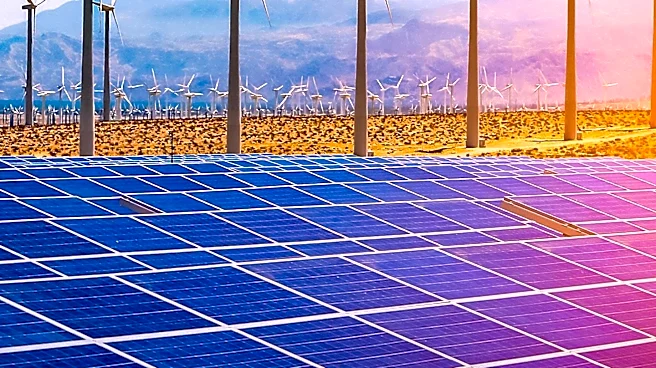
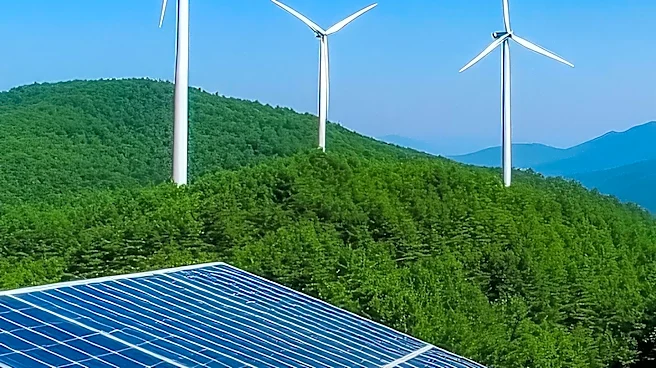
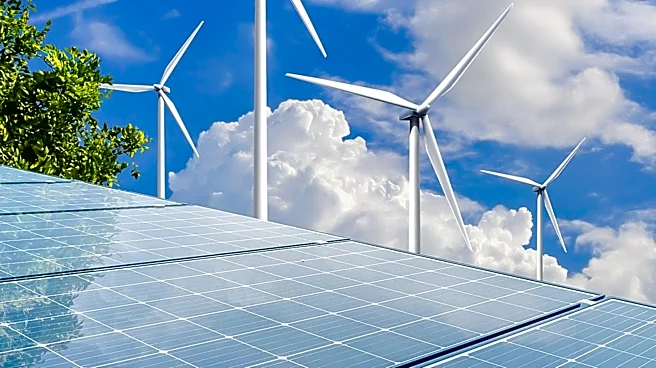
U.S. energy policy, particularly in Democratic-led states, is driving aggressive expansion in wind, solar, and battery storage capacity. Recent data from Q2 2026 shows significant additions, with nearly 7.5 GW of utility-scale solar, a record 5.6 GW of battery storage,
and 5.1 GW of wind added. Projections indicate over 1 TW of combined solar, wind, and storage additions from 2026 to 2036, more than doubling end-2025 levels, partly fueled by data center demand. The U.S. has also made measurable progress in domestic manufacturing, with capacity for battery modules/cells and solar cells roughly doubling since early 2025, and solar modules, wind blades, and nacelles expanding by approximately 50%. Despite these gains, China maintains dominance in the global supply chain for critical components like solar modules, wafers, cells, polysilicon, and lithium battery cells. Cybersecurity concerns are also rising due to the rapid deployment of inverter-based resources, especially those from Chinese manufacturers. A May 2025 Reuters investigation reported undocumented communication devices in Chinese solar inverters and batteries, potentially allowing remote access. In November 2024, a Chinese manufacturer remotely disabled some U.S. inverters, demonstrating operational control capabilities.
Why It's Important?
The accelerated push for renewable energy in the U.S. has significant implications for grid stability, national security, and economic independence. While domestic manufacturing is growing, the continued reliance on Chinese upstream capacity and components poses strategic vulnerabilities. The documented cybersecurity risks associated with Chinese-made inverters, including potential remote access and control, could compromise critical infrastructure and lead to grid instability or blackouts. This situation highlights a tension between rapid renewable deployment goals and the need for a secure, resilient energy supply chain. The shift also impacts consumer costs, as electricity prices are generally higher in blue states with aggressive renewable mandates, raising questions about long-term consumer willingness to bear these costs. The expansion of data centers further amplifies electricity demand, putting additional pressure on the grid and the need for reliable, secure energy sources.
What's Next?
The U.S. is expected to continue its rapid deployment of wind, solar, and storage, with tens to hundreds of gigawatts projected in the coming years. Efforts to further onshore manufacturing will likely intensify, driven by policies like the Inflation Reduction Act, though achieving full independence from Chinese supply chains remains a long-term challenge. Lawmakers, utilities, CISA, and the Department of Energy will continue to assess and address the cybersecurity risks posed by foreign-origin hardware in the grid. Mitigation strategies may include stricter import rules, incentives for domestic or allied inverter production, enhanced supply-chain transparency requirements, and more rigorous testing of connected equipment. The political landscape will also continue to evolve, with ongoing debates about the balance between renewable energy mandates, electricity affordability, and grid reliability, especially as consumer cost sensitivity remains high.
Beyond the Headlines
The current trajectory of U.S. energy policy reveals a complex interplay of economic, geopolitical, and technological factors. The partial onshoring of renewable energy manufacturing, rather than full decoupling from China, suggests a pragmatic approach to supply chain resilience, acknowledging the scale and cost advantages of existing global networks. This creates a nuanced challenge for policymakers aiming to balance national security with economic efficiency. The cybersecurity vulnerabilities in critical energy infrastructure also underscore a broader national security concern in an increasingly interconnected world, where digital threats can have tangible physical impacts. Furthermore, the debate over electricity costs in states pursuing aggressive renewable targets highlights a potential social equity issue, as higher energy bills could disproportionately affect lower-income households, raising questions about the equitable distribution of the costs and benefits of the energy transition.