







What's Happening?
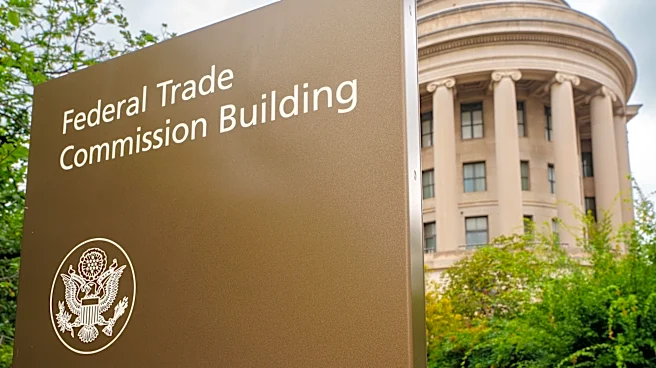
The Federal Trade Commission (FTC) has finalized amendments to its Health Breach Notification Rule, clarifying its application to health applications and digital devices, including fitness trackers. These updates, which went into effect in July 2024,
broaden the definition of personal health records and unauthorized disclosures to address modern data-sharing practices and increased cybersecurity risks. This move follows the FTC's rescission of its 2021 policy statement in September 2026, after determining that the guidance within that statement had been adequately incorporated into the 2024 amendments. Historically, privacy regulations in healthcare have struggled to keep pace with technological advancements. The Health Insurance Portability and Accountability Act (HIPAA) of 1996 primarily focused on traditional healthcare providers, leaving many consumer health apps outside its scope. The HITECH Act of 2009 strengthened HIPAA and directed the FTC to establish breach notification requirements for entities outside HIPAA, leading to the original Health Breach Notification Rule. The recent amendments aim to close existing gaps in consumer health data protection.
Why It's Important?
These amendments are crucial for enhancing consumer privacy in an increasingly digital healthcare landscape. Many consumer health apps, including fitness and period trackers, were not classified as 'covered entities' under HIPAA, leaving sensitive user data vulnerable to sale and unauthorized sharing. The updated rule extends protections to these apps, addressing a significant regulatory gap. This is particularly important given that 81% of Americans believe their personal health data is protected under HIPAA, highlighting a widespread misunderstanding of current safeguards. The lack of comprehensive protection has led to instances like telehealth firm Cerebral's sale of sensitive data to advertisement companies. By modernizing the rule, the FTC aims to prevent such exploitative uses, protect consumers from targeted marketing based on health data, and rebuild public trust in health data tools. Without these changes, the continued breach of privacy without consumer knowledge or consent could erode trust and leave millions vulnerable.
What's Next?
While the FTC's amendments address the obligations of companies after qualifying breaches or unauthorized disclosures, they do not establish comprehensive federal privacy protections for consumer health information *before* such incidents. Congress now faces decisions on whether to further broaden or adapt the HIPAA framework, create a parallel statutory mechanism for consumer health data, or pass a broader baseline federal privacy law. Such a law could address structural questions like whether to regulate broadly or target specific sensitive categories, establish operator requirements, or give consumers active data-portability and control mechanisms. The debate will center on balancing consumer autonomy with digital innovation. Policymakers must decide if federal law should preempt stricter state-level privacy laws, such as Washington's My Health My Data Act, or establish a federal floor. The choice Congress makes will fundamentally redefine the boundaries of personal privacy in the digital age.
Beyond the Headlines
The implications of these regulatory changes extend beyond immediate data protection, touching upon ethical, legal, and cultural dimensions of personal health information. The continuous evolution of technology means that regulations often lag behind innovation, creating a reactive rather than proactive approach to privacy. The vulnerability of sensitive health data, which can sell for significantly more on the dark web than credit card numbers, poses a long-term risk of identity theft, insurance fraud, and social stigma, especially for young people. The clinical disconnect, where many physicians hesitate to recommend health apps due to data security concerns, highlights a broader issue of trust in digital health tools. Ensuring that consumers, particularly young people who are highly digitally connected, have statutory privacy protections equivalent to clinical records is essential. This includes restricting third-party data sharing, banning unnecessary app permissions, and prohibiting the monetization of health and wellness metrics to foster trust and encourage the responsible adoption of beneficial health technologies.