




What's Happening?
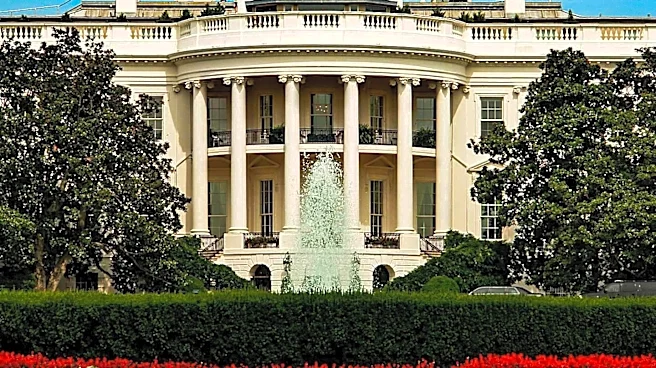
President Trump is under pressure from Democratic lawmakers to de-escalate the conflict with Iran following the deaths of three U.S. troops in recent Iranian strikes. Senator Chris Murphy of Connecticut has criticized the president for losing control
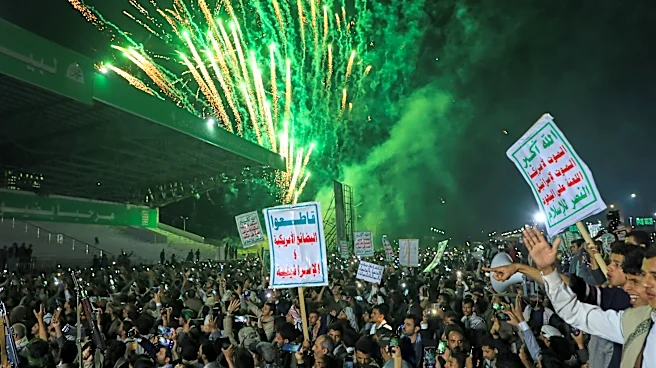
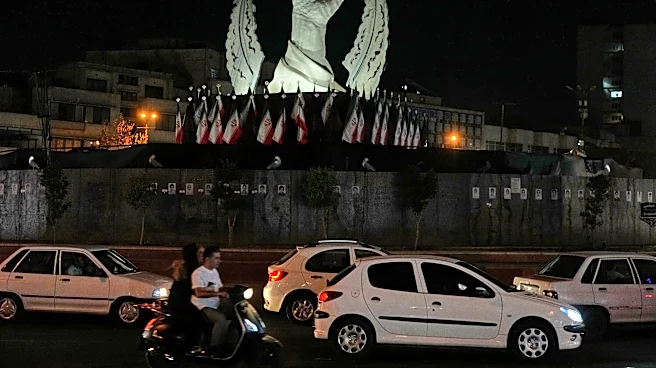
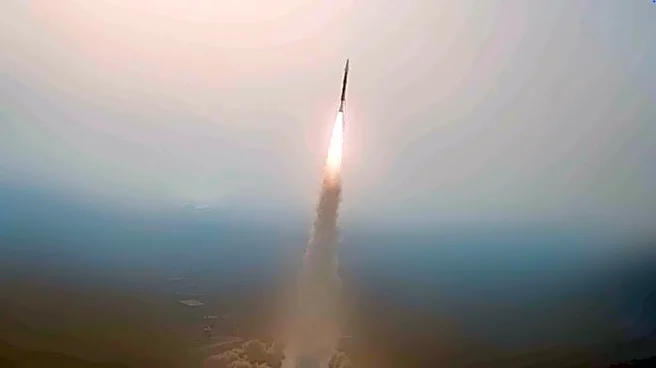
of the situation, as U.S. forces continue to launch attacks against Iranian targets. The conflict reignited after President Trump withdrew from a memorandum of understanding with Iran. In response, Iran's Revolutionary Guards have targeted U.S. military sites in Bahrain and Kuwait, and a tanker in the Strait of Hormuz was reportedly struck by an unknown projectile. The conflict has resulted in at least 17 U.S. service members killed and nearly 100 injured, while over 1,700 Iranian civilians have died.
Why It's Important?
The escalation of conflict between the U.S. and Iran has significant implications for international relations and regional stability. The rising number of U.S. casualties could influence public opinion and political pressure on the administration to reconsider its approach. The conflict also affects global oil markets, given the strategic importance of the Strait of Hormuz. Additionally, the situation could strain U.S. relations with allies in the region, such as Bahrain and Kuwait, who are involved in the conflict. The ongoing military actions may also impact U.S. defense policy and military readiness, as resources are allocated to the Middle East.
What's Next?
The continuation of hostilities could lead to further military engagements and potential retaliatory actions by Iran. The U.S. administration may face increased calls from Congress and the public to seek diplomatic solutions. Regional allies might also push for de-escalation to prevent further destabilization. The international community, including the United Nations, could become more involved in mediating the conflict. The situation may also influence upcoming U.S. elections, as foreign policy becomes a critical issue for voters.