


What's Happening?
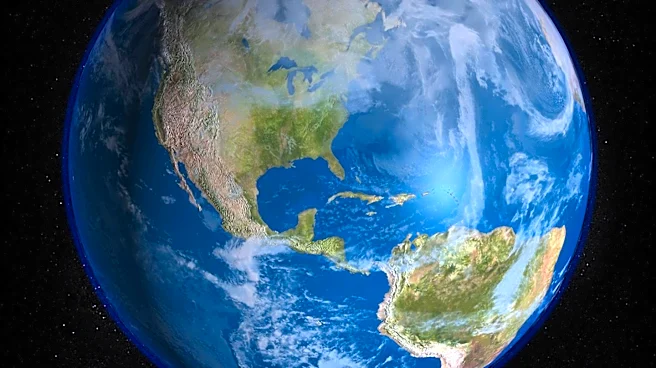
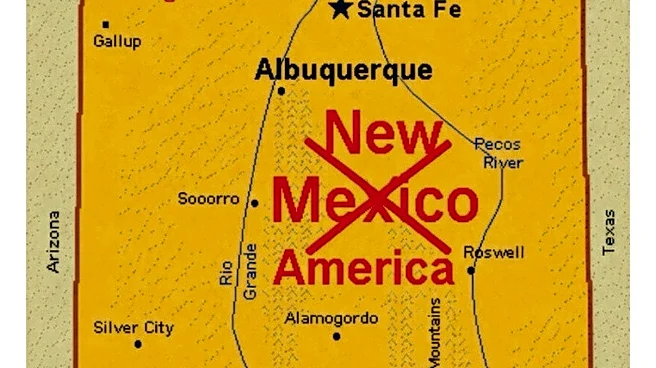
President Trump has published a map on his personal platform, Truth Social, depicting the U.S. flag covering not only the existing American territory but also Mexico, Canada, Central America, Cuba, and Greenland. This action follows previous suggestions
by President Trump, including renaming Lake Ontario to 'Lake America' and replacing 'New Mexico' with 'New America' on a map. Earlier in his second term, he also decreed that the Gulf of Mexico should be called the 'Gulf of America.' These proposals are part of a broader intention to revive the Monroe Doctrine, which he promoted as a national security measure late last year. The renewed doctrine, initially known as 'America for Americans' (referring to the continent for U.S. citizens), did not initially include Canada or Greenland. However, President Trump has since stated that Canada should become the 51st state and that Greenland, a Danish territory, should belong to the U.S. for national security reasons.
Why It's Important?
President Trump's public display of an expanded U.S. map and his verbal proposals carry significant implications for international relations and U.S. foreign policy. The inclusion of sovereign nations like Mexico, Canada, and Cuba, along with Central American countries, on a map under the U.S. flag could be perceived as a direct challenge to their sovereignty and territorial integrity. This could strain diplomatic ties with these countries, potentially leading to economic and political repercussions. For Canada, the suggestion of becoming the 51st state could be seen as an affront to its national identity and independence. Similarly, the claim over Greenland, a territory of Denmark, could create diplomatic friction with European allies. These actions, framed within the context of reviving the Monroe Doctrine, signal a potential shift towards a more assertive and expansionist U.S. foreign policy in the Western Hemisphere, which could destabilize regional alliances and international norms.
What's Next?
The immediate consequences of President Trump's map publication and statements are likely to be diplomatic protests and condemnations from the affected nations and international bodies. These actions could prompt formal responses from the governments of Mexico, Canada, Denmark, and other Central American and Caribbean countries, reiterating their sovereignty and rejecting any claims of U.S. annexation. Domestically, these proposals could become a point of debate in U.S. political discourse, particularly concerning the future direction of foreign policy and international relations. While such territorial claims are unlikely to be realized through conventional means, they could influence public perception and shape future policy discussions. The continued promotion of these ideas by President Trump suggests a persistent vision for an expanded U.S. sphere of influence, which could lead to further rhetoric and potentially more concrete, albeit controversial, policy initiatives if he were to hold office again.
Beyond the Headlines
President Trump's actions extend beyond mere cartographic alterations; they represent a symbolic assertion of power and a reinterpretation of historical doctrines. The Monroe Doctrine, traditionally aimed at preventing European colonization in the Americas, is being re-envisioned to justify U.S. dominance and potential territorial expansion within the hemisphere. This reinterpretation could signal a move away from multilateralism and towards a more unilateral approach to international relations. Ethically, the act of unilaterally redrawing borders and claiming sovereign territories raises questions about international law, self-determination, and respect for national sovereignty. Culturally, such proposals could ignite nationalist sentiments in the affected countries and foster anti-American sentiment. The repeated emphasis on 'America' in various geographical renamings also reflects a nationalistic ideology that seeks to project U.S. identity and influence over broader regions, potentially reshaping geopolitical dynamics in the Americas for decades to come.