


What's Happening?
In January 2026, southeastern Australia experienced an intense heatwave, with temperatures soaring to record highs. According to the Bureau of Meteorology, the area-averaged mean temperature was 1.90 degrees Celsius above the 1961-1990 average, marking
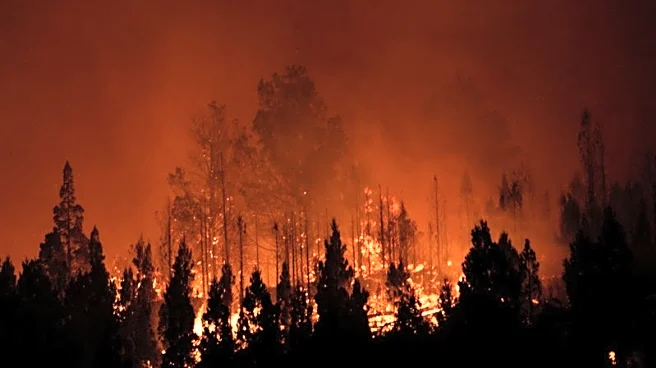
it as the fourth-warmest January since 1910. The heatwave was particularly severe between January 26 and January 30, with temperatures reaching up to 50.0°C in South Australia. The extreme heat led to significant public health concerns, including increased risks of heat-related illnesses. The Australian Open tennis tournament in Melbourne had to suspend play on some courts and implement an 'extreme heat policy' to protect players and spectators. Additionally, the heatwave exacerbated fire conditions, leading to numerous bushfires across Victoria, which destroyed structures and livestock.
Why It's Important?
The heatwave in Australia highlights the growing impact of climate change on global weather patterns, with significant implications for public health and safety. The extreme temperatures pose direct health risks, particularly for vulnerable populations, and strain public health systems. The situation also underscores the need for robust emergency response strategies and infrastructure capable of withstanding such extreme conditions. Furthermore, the fires resulting from the heatwave have economic implications, affecting agriculture, property, and insurance industries. The event serves as a critical reminder of the urgent need for climate action and adaptation strategies to mitigate future risks.
What's Next?
As climate change continues to influence weather patterns, Australia and other regions may need to prepare for more frequent and severe heatwaves. This could involve investing in infrastructure improvements, enhancing public health systems, and developing comprehensive emergency response plans. Policymakers may also need to consider stricter environmental regulations and initiatives to reduce greenhouse gas emissions. The international community might increase collaboration on climate adaptation strategies to address the global nature of these challenges.