


What's Happening?
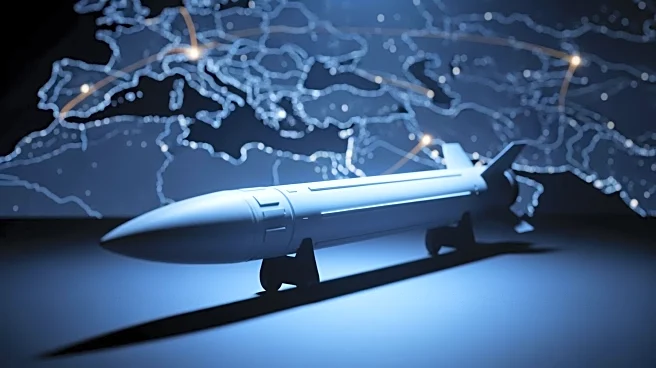
Israeli defense officials have expressed growing concern over Iran's accelerating ballistic missile program, which poses a significant threat to regional stability. According to Israeli assessments, Iran is currently producing approximately 100 ballistic missiles
per month, with the potential to possess at least 5,000 missiles by the end of 2027. This development comes despite ongoing U.S. negotiations with Iran focusing primarily on nuclear issues. During a recent conflict, dubbed Operation Rising Lion, Iran launched over 500 ballistic missiles and 1,000 drones towards Israel, resulting in significant damage despite high interception rates. Israeli forces responded with a strategic shift from defense to offense, targeting missile launchers and production sites within Iran. The operation highlighted the limitations of even advanced air defense systems against sustained missile barrages.
Why It's Important?
The expansion of Iran's missile capabilities represents a critical security challenge for Israel and potentially for U.S. interests in the Middle East. The ability of Iran to produce a large volume of missiles could overwhelm existing defense systems, posing a direct threat not only to Israel but also to U.S. bases and allies in the region. This situation underscores the need for enhanced military cooperation between Israel and the United States, as well as a reevaluation of diplomatic strategies concerning Iran. The missile threat complicates the geopolitical landscape, potentially constraining U.S. operational freedom and necessitating a more robust defense posture in the region.
What's Next?
Israeli and U.S. defense officials are likely to continue their close coordination to address the missile threat. This includes potential joint military exercises and intelligence sharing to improve interception capabilities and develop new strategies for missile defense. Diplomatic efforts may also intensify, with Israel advocating for greater international pressure on Iran to curb its missile production. However, the prospects for a diplomatic breakthrough remain uncertain, as the missile program is not currently subject to effective oversight in ongoing negotiations.
Beyond the Headlines
The situation highlights the broader implications of military deterrence strategies in the Middle East. Iran's focus on missile production, despite economic sanctions and internal pressures, suggests a strategic emphasis on military capabilities as a means of asserting regional influence. This could lead to an arms race in the region, prompting neighboring countries to enhance their own military arsenals. Additionally, the reliance on liquid-fueled missiles by Iran, due to sanctions limiting access to advanced components, indicates a potential vulnerability that could be exploited in future diplomatic or military strategies.