




What's Happening?
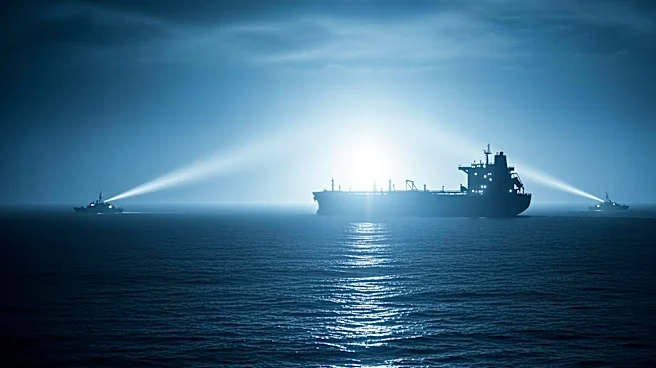
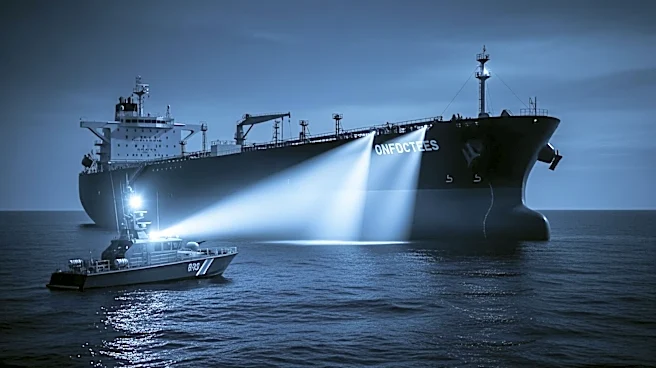
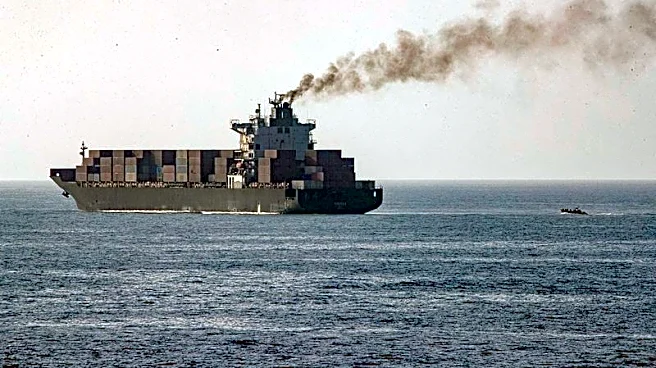
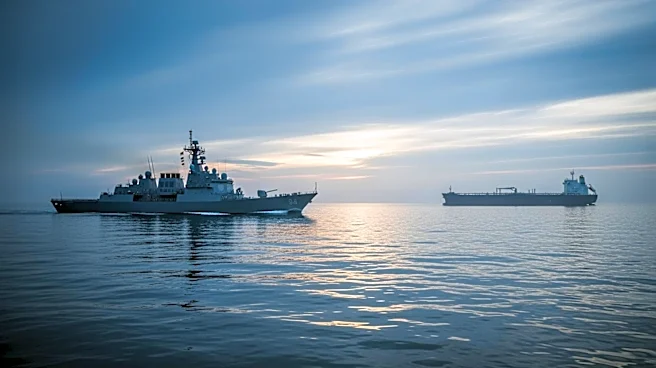
The US Navy has intercepted an Iran-linked oil tanker, the M/T Tifani, in the Indian Ocean, marking a significant extension of its maritime enforcement efforts against Iranian vessels. The tanker, capable of carrying 2 million barrels of crude oil, was
stopped between Sri Lanka and Indonesia, far from the Persian Gulf. This action is part of a broader US strategy to track and interdict Iranian vessels globally, increasing pressure on Tehran. The interception follows a series of sudden course changes by the tanker, which had previously been at Iran's Kharg Island oil terminal. The US Defense Department released footage of troops boarding the tanker from helicopters launched from an expeditionary sea base, highlighting the extensive resources deployed for this operation.
Why It's Important?
This interception underscores the US commitment to enforcing sanctions against Iran, potentially complicating peace talks between the two nations. By expanding its maritime operations to the Indo-Pacific region, the US is demonstrating its global reach and willingness to confront Iran's 'dark fleet' operations. This move could further strain US-Iran relations, as Iran has already refused to participate in new peace talks following the seizure of another Iranian vessel. The operation may also set a precedent for future maritime interdictions, affecting global oil markets and international diplomatic efforts to resolve tensions in the region.
What's Next?
The intercepted tanker, M/T Tifani, remains in the Indian Ocean, with its future uncertain. The US may seek to seize the vessel and its cargo as a 'prize' of war, similar to previous actions against Iranian-linked vessels. Iran has vowed retaliation for such seizures, which it views as violations of international agreements. The situation could lead to increased maritime confrontations and further diplomatic fallout, potentially impacting global oil supply chains and regional security dynamics.