



What's Happening?
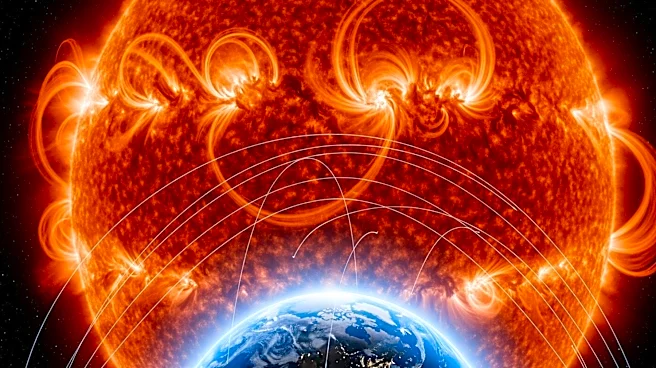
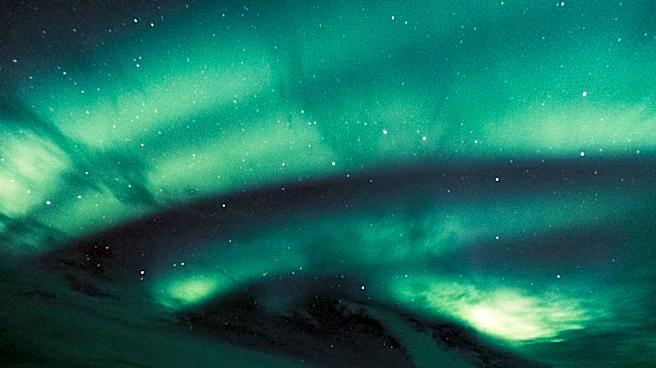
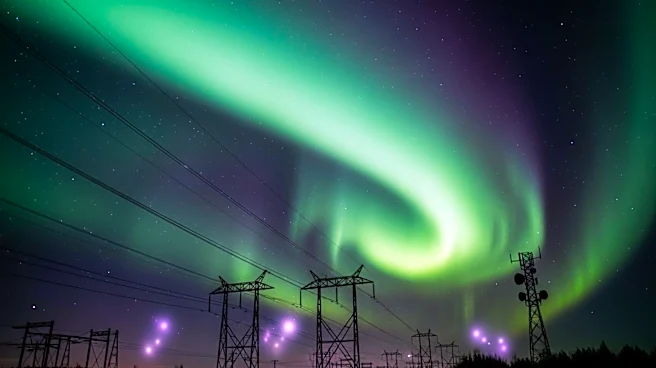
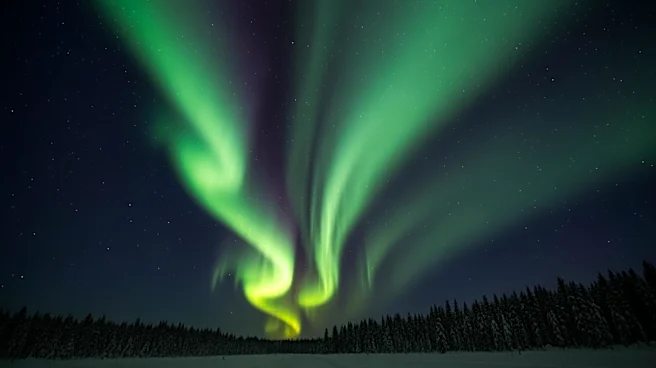
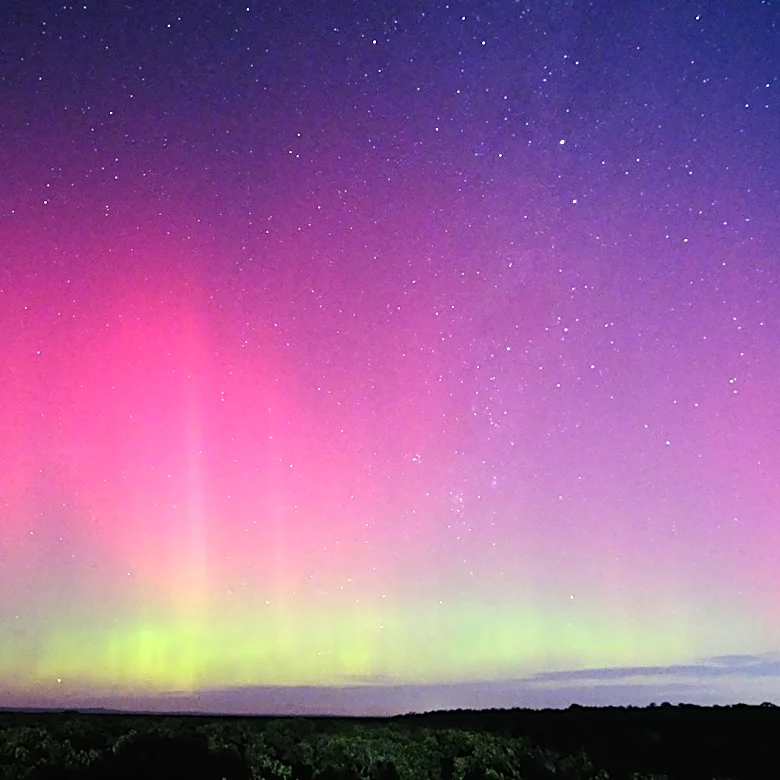
The National Oceanic and Atmospheric Administration (NOAA) has issued geomagnetic storm watches for Monday and Tuesday following a coronal mass ejection (CME) from the sun. This event could lead to the northern lights, or aurora borealis, being visible
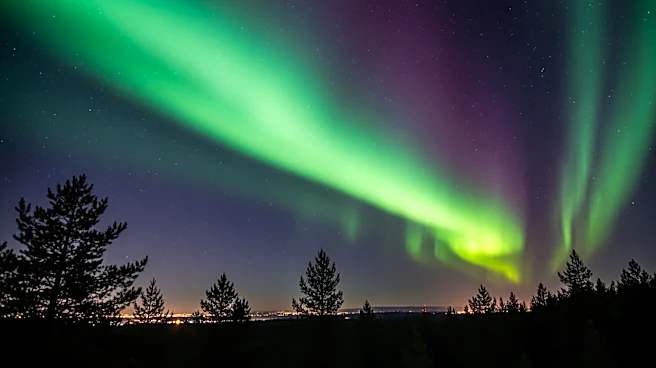
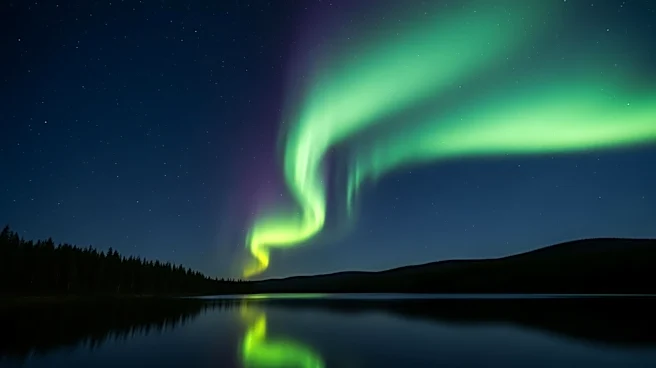
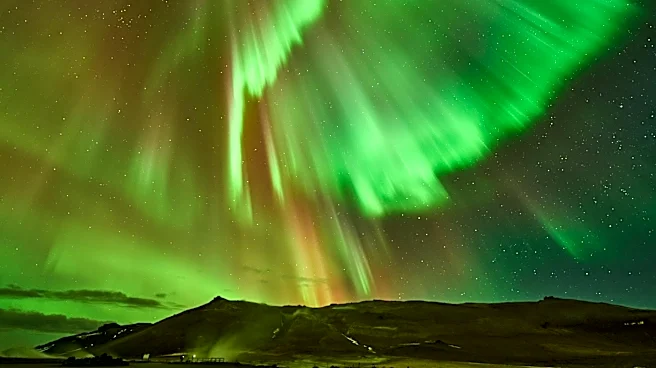
across more than 15 U.S. states. The CME, which is a burst of plasma and magnetic fields from the sun, is expected to reach Earth, potentially causing a G3-level geomagnetic storm. Such storms can create vibrant auroras visible in the night sky. The best viewing times are typically between 10 p.m. and 2 a.m., with the strongest geomagnetic activity forecasted between 11 a.m. and 2 p.m. ET on Monday. However, the auroras are expected to be visible into the evening, especially in northern states and possibly as far south as Illinois and Oregon.
Why It's Important?
The potential visibility of the northern lights across a large portion of the U.S. is significant due to the rarity of such events at lower latitudes. This phenomenon provides a unique opportunity for millions of Americans to witness a natural spectacle typically reserved for higher latitudes. The event also highlights the impact of solar activity on Earth's magnetosphere, which can have broader implications for satellite operations and power grids. The increased public interest in such celestial events can also boost local tourism in areas with optimal viewing conditions, benefiting local economies.
What's Next?
As the geomagnetic storm progresses, NOAA will continue to monitor and update forecasts. Skywatchers are advised to check real-time aurora forecasts and local weather conditions to maximize their chances of seeing the northern lights. The storm is expected to weaken to a G2 level by Tuesday, reducing the likelihood of aurora visibility further south. However, clear skies and low light pollution will remain critical for optimal viewing conditions.