
What's Happening?
Recent research conducted by the Ineos Oxford Institute for Antimicrobial Research at the University of Oxford has identified a significant link between modern chicken farming practices and the rise in food
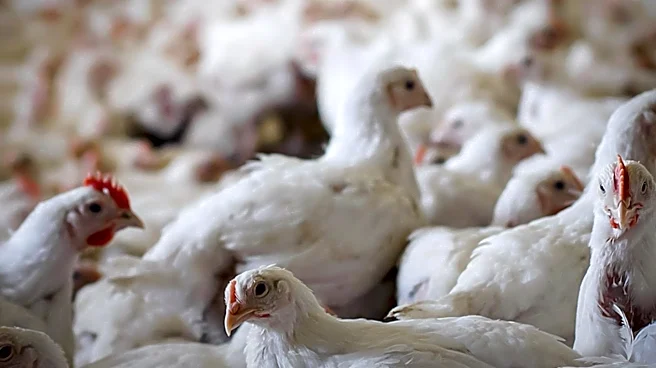
poisoning caused by Campylobacter. The study analyzed nearly 2,800 bacterial genomes from chickens and wild birds across 30 countries, including the U.S., from 1979 to 2024. The findings suggest that the rapid expansion of the global poultry industry has created ideal conditions for Campylobacter to spread, mix, and evolve, turning commercial flocks into 'pathogen sponges.' This situation is exacerbated by rising rates of antimicrobial resistance, making infections harder to treat. Despite the alarming findings, researchers emphasize that good kitchen hygiene and thorough cooking can mitigate risks.
Why It's Important?
The study highlights the growing concern over food safety and the challenges posed by antimicrobial resistance. Campylobacter is already a recognized food safety issue, causing approximately 1.9 million foodborne illnesses and 13,000 hospitalizations in the U.S. in 2019. The research underscores the need for the poultry industry to adopt measures similar to those used to control Salmonella, such as vaccination and biosecurity efforts. The findings also call for a reevaluation of intensive livestock production practices, which not only increase food production but also create opportunities for pathogens to evolve and spread.
What's Next?
The study suggests that the poultry industry should aim higher than simply managing contamination. Enhanced farm biosecurity can reduce Campylobacter in poultry flocks, but a more ambitious approach is needed. The industry could look to successful models used for Salmonella control as a guide. Additionally, backyard flock owners are encouraged to maintain good flock management practices to reduce the risk of bacterial spread.