







What's Happening?
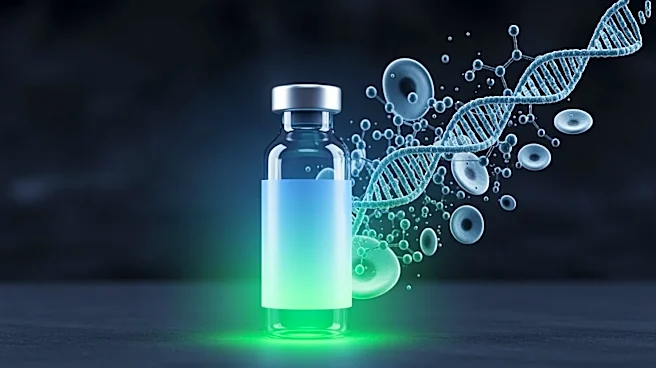
A recent study has shown that a personalized mRNA vaccine, developed by Moderna in collaboration with Merck, is highly effective in preventing the recurrence of melanoma when used alongside the immunotherapy drug Keytruda. The trial, which included 157
patients from the U.S. and Australia, demonstrated that the combination therapy reduced the risk of cancer recurrence by 49% over five years. The vaccine is tailored to each patient's tumor, using mRNA technology to train the immune system to recognize and attack specific neoantigens associated with the cancer. This approach has shown promising results, with 68.8% of patients remaining cancer-free after five years, compared to 49.1% who received only Keytruda.
Why It's Important?
The success of this personalized mRNA vaccine marks a significant advancement in cancer treatment, offering a new method to prevent the recurrence of melanoma, a particularly aggressive form of skin cancer. This development could lead to more effective and personalized cancer therapies, reducing the need for more invasive treatments and improving patient outcomes. The use of mRNA technology in this context demonstrates its potential beyond infectious diseases, highlighting its role in developing targeted cancer treatments. This could revolutionize the field of oncology, providing new hope for patients with high-risk cancers.
What's Next?
A phase 3 trial involving nearly 1,000 patients is currently underway to further assess the vaccine's efficacy and safety. The results of this trial will be critical in determining the vaccine's potential for FDA approval and its integration into standard cancer treatment protocols. Researchers are also investigating the application of mRNA vaccines for other types of cancer, such as lung cancer, which could further expand the impact of this technology in oncology. If successful, these developments could lead to a new era of personalized cancer treatment, improving survival rates and quality of life for patients.