







What's Happening?
The United Nations Development Programme (UNDP) and the Government of the Republic of Korea have launched Phase II of the Relief, Employment and Vital Infrastructure for the Vulnerable in Emergencies (REVIVE) initiative. This $50 million program aims
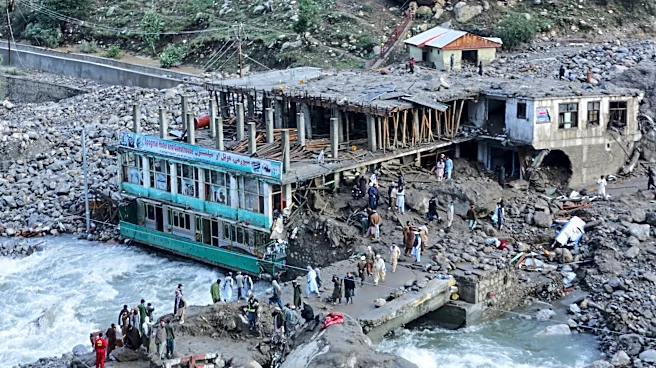
to assist approximately 3.8 million people in rebuilding their lives across several crisis-affected regions, including Gaza, Afghanistan, Myanmar, Sudan, South Sudan, and Syria. The initiative focuses on restoring critical infrastructure, creating emergency employment, reviving livelihoods, and strengthening local institutions. The program builds on the success of Phase I, which cleared debris, rehabilitated community infrastructure, and improved access to essential services. Phase II will expand these efforts, particularly in Sudan and South Sudan, integrating infrastructure rehabilitation with emergency employment and community-led recovery planning.
Why It's Important?
This initiative is significant as it addresses the growing need for sustainable recovery solutions in regions affected by prolonged crises. By focusing on early recovery, the program aims to reduce dependence on emergency assistance and foster long-term resilience. The investment in infrastructure and livelihoods is crucial for stabilizing local economies and supporting communities in crisis zones. The program's expansion into new regions like Sudan and South Sudan highlights the increasing complexity and frequency of global crises, necessitating comprehensive recovery strategies. The initiative also underscores the importance of international collaboration in addressing humanitarian challenges and supporting vulnerable populations.
What's Next?
The REVIVE initiative will continue to implement its strategies over the next year, with a focus on integrating infrastructure rehabilitation with livelihood restoration. The program will likely monitor and assess its impact on the targeted communities, adjusting strategies as needed to maximize effectiveness. Stakeholders, including local governments and international partners, may engage in further collaborations to enhance the program's reach and sustainability. The success of this initiative could serve as a model for similar recovery efforts in other crisis-affected regions, potentially influencing future international aid strategies.