






What's Happening?
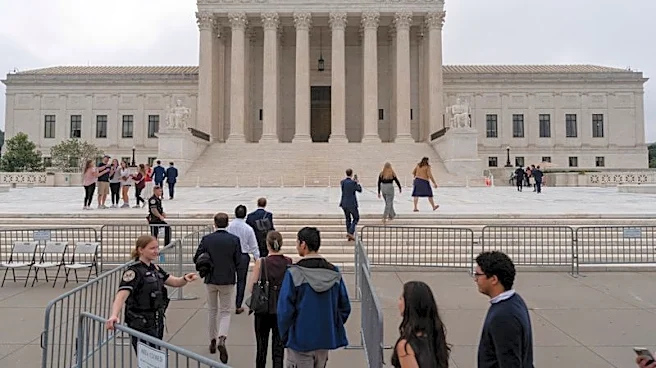
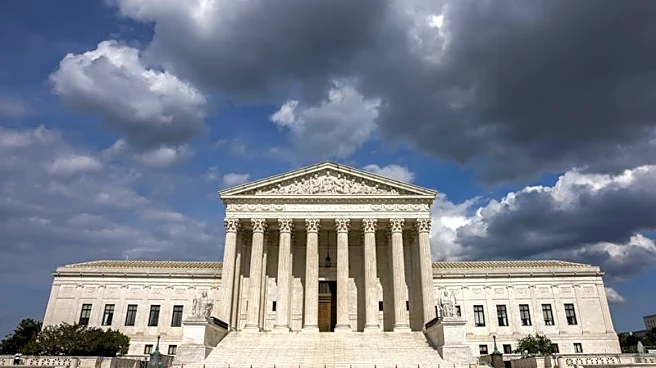
The U.S. Supreme Court has ruled that law enforcement must obtain a warrant before conducting geofence searches, which involve collecting cellphone location data from a specific area. This decision stems from the case of Okello Chatrie, who was identified
as a suspect in a 2019 bank robbery through such a warrant. The court's 6-3 decision, written by Justice Elena Kagan, emphasizes that individuals have a reasonable expectation of privacy regarding their cellphone location data. The ruling requires that any geofence warrant must meet the Fourth Amendment's standards of particularity and probable cause. The case has been sent back to a lower court to determine if the warrant used in Chatrie's case met these requirements.
Why It's Important?
This ruling is significant as it sets a precedent for how digital privacy is protected under the Fourth Amendment. It limits the ability of law enforcement to access personal data without a warrant, thereby reinforcing privacy rights in the digital age. The decision could impact how tech companies handle user data and how law enforcement conducts investigations, potentially leading to changes in how digital evidence is gathered and used in court. Privacy advocates view this as a victory for individual rights, while law enforcement agencies may face challenges in adapting to these new legal standards.
What's Next?
The case will return to a lower court to assess whether the warrant in Chatrie's case was sufficiently particularized and supported by probable cause. This could lead to further legal scrutiny of past and future geofence warrants. Tech companies like Google, which frequently receive such warrants, may need to adjust their data handling practices to comply with the ruling. Additionally, the decision may prompt legislative action to clarify the legal standards for digital privacy and law enforcement access to data.