






What's Happening?
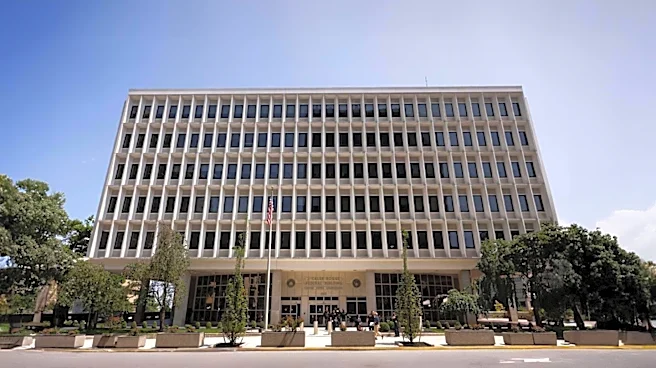
On August 10, 2026, Judge Michael A. Shipp of the U.S. District Court for the District of New Jersey issued a final judgment declaring that the labor peace agreement (LPA) requirement within New Jersey’s Cannabis Regulatory, Enforcement Assistance, and
Marketplace Modernization Act (CREAMMA) is preempted by the National Labor Relations Act (NLRA). This ruling converts a May 2026 preliminary injunction opinion into a final, appealable order. CREAMMA had conditioned cannabis licensure on businesses signing an LPA with a labor union and negotiating a collective bargaining agreement within 200 days of opening. Curaleaf Holdings Inc. sued in October 2025 after its LPA expired in April 2025, resulting in a $610,000 fine. The court rejected the state's argument that the NLRA does not apply to the cannabis industry, distinguishing between the cannabis product market and the labor market. The court found the LPA requirement preempted under both Garmon and Machinists doctrines, as it impermissibly conditions a state license on refraining from conduct protected by federal labor law and regulates aspects of labor-management relations intended to be left to the free play of economic forces.
Why It's Important?
This decision is significant for employers, particularly those in industries subject to state-level labor regulations, as it reinforces the supremacy of federal labor law over state attempts to mandate specific labor relations conduct. The ruling adds to a growing body of federal court decisions that reject state efforts to regulate private-sector labor relations in ways that conflict with the NLRA. For the cannabis industry, which operates in a complex legal landscape due to federal illegality and state-level legalization, this ruling clarifies that federal labor laws still apply to its labor market. It suggests that states cannot use licensing requirements to dictate the terms of employer-union relationships, such as requiring employers to forgo certain economic weapons or insist on NLRB-supervised elections. This could lead to more consistent labor relations practices across states, reducing the burden on businesses operating in multiple jurisdictions and potentially influencing how other states structure their cannabis regulations or other industry-specific labor mandates.
What's Next?
The final judgment sets the stage for a review by the Third Circuit Court of Appeals, which will likely issue a landmark decision on NLRA preemption and state-mandated labor obligations. Employers should anticipate continued litigation as other states' labor laws are challenged on similar preemption grounds. The outcome of the Third Circuit's review will provide further clarity on the extent to which states can regulate labor relations within industries, especially those with unique legal statuses like cannabis. Businesses in other states with similar LPA requirements, such as New York and California, will be closely watching this case, as it could influence the viability of their own state-mandated labor provisions. The ruling may also prompt states to re-evaluate their regulatory frameworks to ensure compliance with federal labor law, potentially leading to amendments or repeals of conflicting state statutes.
Beyond the Headlines
This ruling highlights a fundamental tension between state regulatory authority and federal labor law, particularly in emerging or federally ambiguous industries like cannabis. The court's distinction between the cannabis product market and its labor market is crucial, asserting that even if a product is federally illegal, the labor relations within that industry are still subject to federal oversight. This principle could have broader implications for other industries where states attempt to impose specific labor conditions as part of their regulatory schemes. The decision underscores the importance of the NLRA's role in maintaining a uniform national labor policy, preventing a patchwork of state-specific labor requirements that could complicate interstate commerce and labor relations. It also raises questions about the balance of power between state and federal governments in areas of shared jurisdiction, particularly when state initiatives, even those aimed at promoting labor peace, are deemed to infringe upon federally protected rights or activities.