


What's Happening?
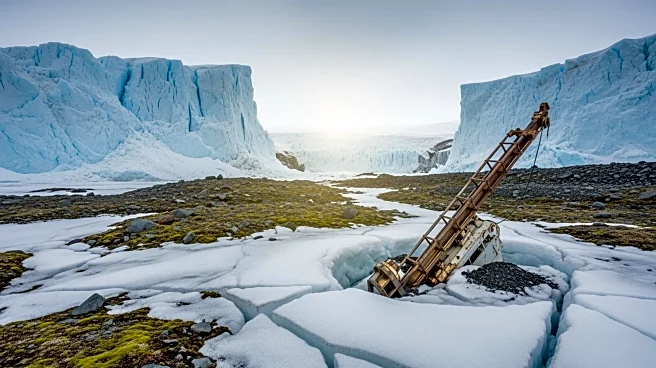
President Trump has expressed interest in Greenland's mineral wealth as a strategic move to reduce reliance on China for rare-earth metals. Despite the potential economic benefits, the harsh Arctic environment and Greenland's stringent environmental regulations
pose significant challenges to mining operations. Greenland, a self-ruling territory of Denmark, lacks the necessary infrastructure and manpower for large-scale mineral extraction. The local population's desire to maintain environmental integrity further complicates potential U.S. mining endeavors. Additionally, any move to acquire Greenland would likely require a referendum, with current polls showing minimal support for such a transition.
Why It's Important?
The interest in Greenland's resources highlights the geopolitical significance of rare-earth metals, which are crucial for various high-tech and defense applications. The U.S. aims to diversify its supply chain and reduce dependency on China, a major player in the rare-earth market. However, the environmental and logistical hurdles in Greenland underscore the complexities of Arctic resource extraction. The situation also reflects broader themes of international relations and territorial sovereignty, as Greenland's status as a Danish territory and its local governance play critical roles in any potential U.S. involvement.
What's Next?
Future developments may include diplomatic negotiations between the U.S., Denmark, and Greenland to explore feasible collaboration on resource extraction. The Trump administration might consider offering financial incentives to U.S. companies to invest in Greenland, though this could face resistance from local and international stakeholders. The environmental impact of such projects will likely be a focal point of ongoing discussions, with potential implications for U.S.-Danish relations and Arctic policy.
Beyond the Headlines
The pursuit of Greenland's resources raises ethical questions about environmental stewardship and the rights of indigenous populations. The potential for U.S. involvement in Greenland could alter the geopolitical landscape of the Arctic, influencing international policies on climate change and resource management. The narrative also touches on historical patterns of territorial acquisition and the modern implications of such ambitions.