


What's Happening?
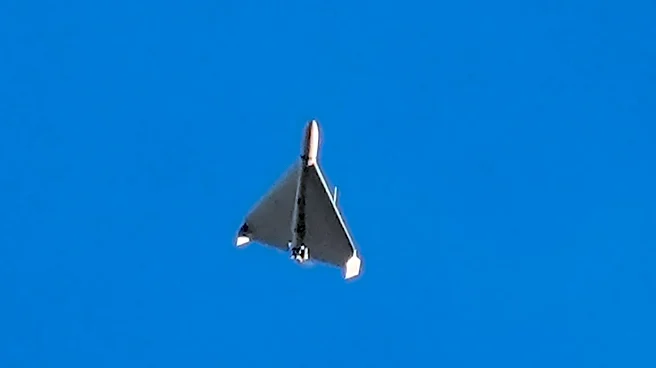
The U.S. military is grappling with the economic challenges posed by anti-drone defense strategies, as highlighted by recent operations. During the Israel-Hamas War, U.S. warships intercepted numerous Houthi-made drones over the Red Sea, using advanced
interceptor missiles costing approximately $2.1 million each. In contrast, the drones targeted by these missiles were estimated to cost only around $2,000 each. This significant cost disparity underscores a broader issue in modern defense strategies, where the financial burden of intercepting low-cost drones with expensive technology is becoming unsustainable. The situation is further complicated by the continuous threat exposure faced by countries like Israel, which must balance the lethality and sustainability of their defense systems.
Why It's Important?
The economic imbalance in anti-drone defense strategies has significant implications for U.S. military operations and defense budgets. As state and non-state actors increasingly exploit this cost-exchange disparity, advanced militaries are pressured to find more cost-effective solutions. The current approach, which often involves sacrificing expensive interceptor systems to neutralize cheap drones, is not sustainable in the long term. This economic strain could weaken defense capabilities, as resources are depleted at a faster rate than they can be replenished. The need for more sustainable and scalable defense solutions is critical to maintaining military readiness and effectiveness in the face of persistent drone threats.
What's Next?
To address these challenges, the U.S. military and its allies may need to explore alternative defense strategies that prioritize cost-effectiveness and sustainability. This could involve developing new technologies, such as net-based interceptions, which allow for the reuse of expensive platforms while using cheaper consumables. Such innovations could help shift the economic burden away from the platform and onto the effector, ensuring a more stable defense posture. Additionally, there may be increased collaboration with international partners to share resources and develop joint solutions to the growing drone threat.
Beyond the Headlines
The shift towards more economically sustainable defense strategies could have broader implications for military doctrine and procurement policies. As the focus moves from purely technical success to economic viability, there may be a reevaluation of how defense systems are designed and deployed. This could lead to a greater emphasis on preserving high-value assets and developing cost-effective consumables, potentially reshaping the landscape of modern warfare. Furthermore, the integration of advanced technologies, such as artificial intelligence and autonomous systems, could play a crucial role in enhancing the efficiency and effectiveness of future defense strategies.