








What's Happening?
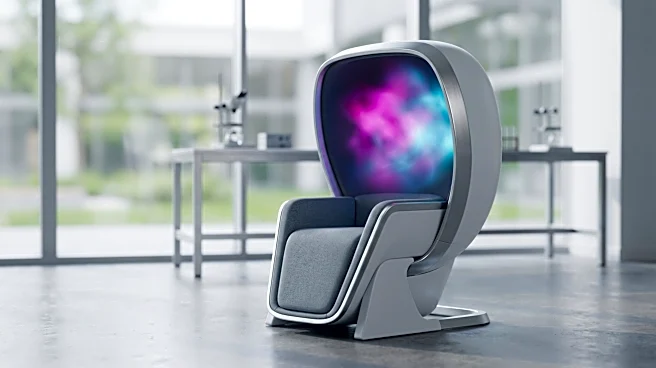
Researchers at Kyushu University have introduced an innovative virtual reality (VR) system that integrates the VR experience into a chair, eliminating the need for traditional head-mounted displays. This new design utilizes micromirror technology to project
a three-dimensional view within an optical pod that envelops the user. The system aims to address discomfort associated with wearing VR headsets for extended periods by shifting the display from the user's head to the chair structure. The prototype features a high-backed seat and a substantial white enclosure that projects the immersive experience. A micromirror array inside the setup directs varied images to each eye, creating depth without requiring face-hugging lenses. The virtual scene appears to float in front of the user, offering a more natural sense of space. The chair itself incorporates a gyroscope to detect rotation, allowing the user's perspective in the virtual realm to change seamlessly without wearable trackers.
Why It's Important?
This development could significantly impact the accessibility and comfort of virtual reality experiences, potentially broadening its appeal beyond current users. By removing the need for headsets, the system could make VR more comfortable for longer sessions and reduce issues like VR sickness, although concrete evidence for the latter is still being researched. The integration of VR into furniture opens new avenues for design, allowing for larger components and broader views, which could lead to more immersive and less restrictive virtual environments. This technology could be particularly beneficial in settings where multiple users share equipment, such as museums or educational institutions, as it eliminates the need for shared headgear and the associated hygiene concerns. For stationary operators who need to assess remote sites, this headset-free approach could offer a more practical and comfortable solution.
What's Next?
While the current system is a prototype, researchers suggest potential applications in various fields. Future developments may focus on refining the technology to enhance immersion and further mitigate VR sickness. The modular nature of the design could allow for flexible configurations to suit different project needs, such as in open and large spaces like restaurants, offices, educational institutions, and conference halls. The integration of optics into furniture could lead to new design possibilities, allowing for larger components and broader views. Further research will likely explore the system's efficacy in preventing nausea and its overall impact on user experience. The trade-offs, such as the stationary nature of the system and its larger footprint compared to traditional headsets, will also need to be addressed as the technology evolves.
Beyond the Headlines
The shift from head-mounted VR to chair-integrated systems represents a fundamental rethinking of how immersive technologies can be delivered. This approach challenges the conventional idea that immersion must burden the user, instead proposing that the environment can carry the hardware. This could lead to a more inclusive VR experience, making it accessible to individuals who find traditional headsets uncomfortable or restrictive. The ethical implications of prolonged immersion in a stationary, enclosed environment could also become a topic of discussion, particularly regarding potential psychological effects or detachment from physical surroundings. Furthermore, the design freedom offered by integrating VR into furniture could inspire entirely new categories of interactive experiences and public installations, moving beyond individual consumption to shared, communal VR spaces.