


What's Happening?
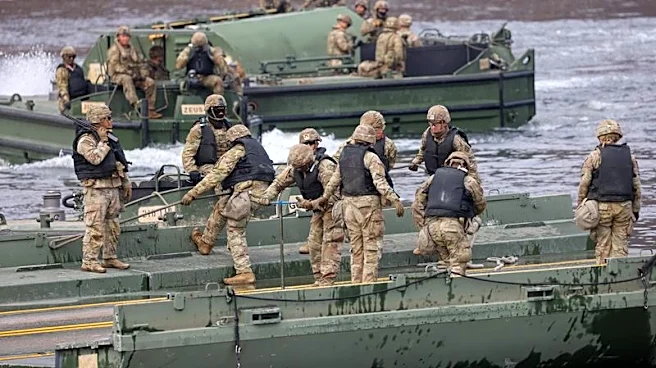
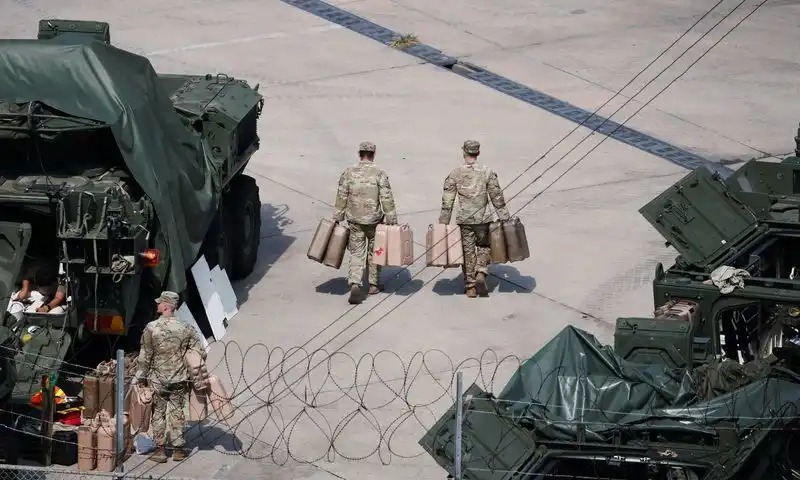
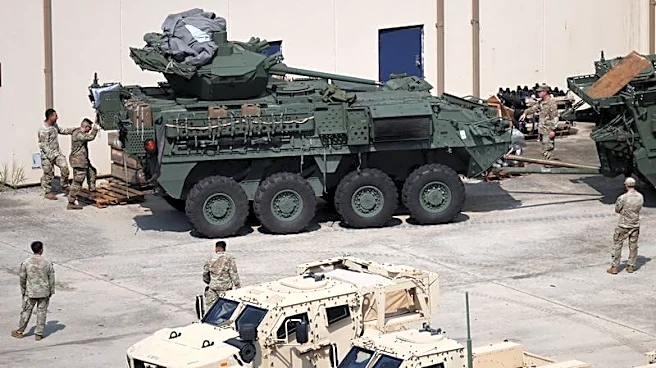
President Trump has announced a significant reduction in joint military exercises with South Korea, specifically the 'Ulchi Freedom Shield' operations. These exercises are designed to prepare South Korean forces, with U.S. assistance, to defend against
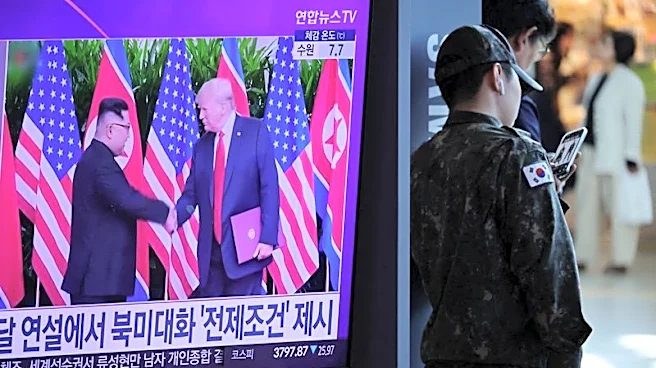
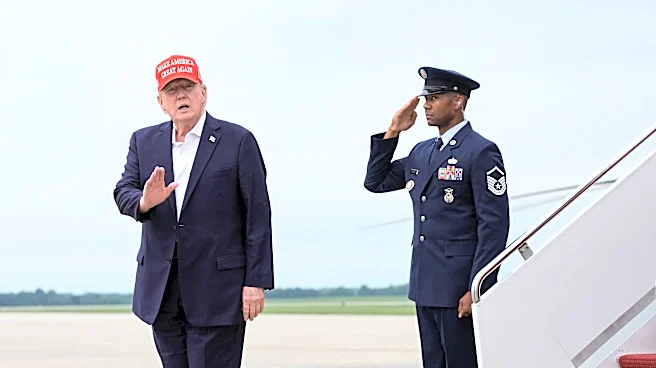
military threats, primarily from North Korea. President Trump cited the exercises as 'costly' and stated that they send an 'inappropriate and hostile' signal to North Korean leader Kim Jong-Un, with whom he claims to have an 'excellent relationship.' This decision follows a previous suspension of joint military exercises in 2018 after a summit with Kim Jong-Un in Singapore, which ultimately did not lead to denuclearization. The move has generated consternation among both Republican and Democratic circles, raising questions about the consistency of U.S. foreign policy in Asia and the credibility of the U.S. as an ally. Richard Fontaine, a senior fellow at the Center for a New American Security (CNAS), questioned the coherence of U.S. policy, noting that South Korea was recently considered a 'model ally.'
Why It's Important?
The reduction in U.S.-South Korea military exercises carries significant implications for regional stability and U.S. alliances. Critics argue that scaling back these drills undermines the long-standing alliance with South Korea, which has been a cornerstone of security in the Indo-Pacific for over seventy years. This action could be perceived as a weakening of U.S. commitment to its allies, potentially emboldening adversaries like North Korea and China. The deployment of the aircraft carrier George Washington to the Middle East, temporarily leaving no U.S. aircraft carrier in the Pacific, further amplifies concerns about a potential U.S. disengagement from Asia, creating a strategic vacuum that Beijing could exploit. Drake Grossman, a senior fellow at CNAS, warned that if the Trump administration continues to use allied security commitments as a tool of pressure, the alliance system could gradually collapse. This shift could force South Korea and Japan to take on greater responsibility for their own security, potentially leading to increased military spending and a re-evaluation of their strategic alignments.
What's Next?
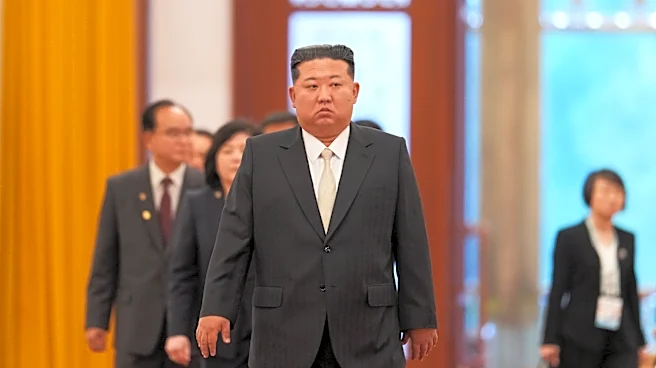
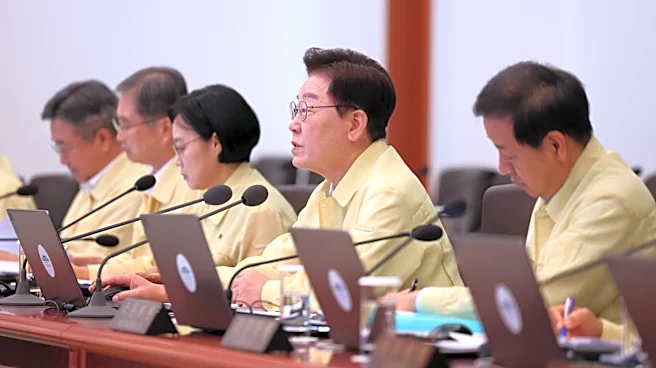
The immediate future will likely see continued debate and scrutiny over President Trump's foreign policy decisions, particularly concerning U.S. alliances and military posture in Asia. South Korean authorities have indicated that the exercises began 'as planned,' expressing hope that the personal rapport between President Trump and Kim Jong-Un could lead to 'constructive dialogue' and negotiations. However, experts like Victor Cha of the Center for Strategic and International Studies (CSIS) suggest that Kim Jong-Un might delay meeting President Trump until after the November midterm elections to gain additional leverage. There is also speculation that President Trump's actions could be an attempt to distance Kim Jong-Un from Russian President Vladimir Putin, especially given the strengthening Moscow-Pyongyang axis in the context of the war in Ukraine. The long-term implications could include a re-evaluation of defense spending and strategic autonomy by U.S. allies in the region, and a potential shift in the balance of power in the Indo-Pacific.
Beyond the Headlines
Beyond the immediate strategic concerns, President Trump's approach to alliances highlights a broader philosophical shift in U.S. foreign policy, moving away from the traditional role of global guarantor. His 'America First' strategy, as outlined in his National Security Strategy, emphasizes economic competition with Beijing and calls for allies like Japan and South Korea to do more to support Taiwan and ensure their own security. This perspective challenges the post-World War II paradigm where the U.S. largely underwrote global security. The reduction of military exercises, framed as a cost-saving measure and a diplomatic overture, could inadvertently signal to authoritarian regimes that U.S. commitments are transactional and subject to change based on domestic political considerations or personal relationships. This could erode trust in U.S. leadership and encourage a more multipolar world order where traditional alliances are less reliable, potentially leading to increased regional instability and a more fragmented international security landscape.