
What's Happening?
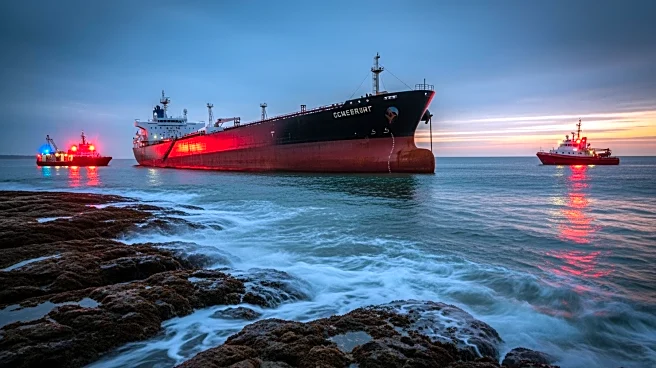
The oil tanker Qendil, which has been sanctioned by several countries, ran aground off the coast of Bozcaada, Turkey. The incident occurred as the vessel was en route from Aliaga to Yalova. According to the Turkish
maritime safety agency KEGM, the tanker drifted onto a rocky shore near Bozcaada, a popular tourist destination in the Aegean Sea. The ship had been anchored southwest of the island since December 30, but for unknown reasons, it departed its anchorage on January 4 and reached an unusual speed of four knots before grounding about 100 meters offshore. The vessel was subjected to strong onshore winds and heavy waves. Two tugs, Kurtarma-10 and Kurtarma-16, were dispatched to assist, and no pollution or injuries have been reported.
Why It's Important?
The grounding of the Qendil highlights the ongoing challenges associated with managing maritime traffic in the Aegean Sea, a region known for its complex geography and heavy shipping activity. The incident underscores the risks posed by vessels that are part of the so-called 'shadow fleet,' which often operate under multiple flags and ownerships to evade sanctions. The Qendil's involvement in this network, as indicated by its history of ownership and flag changes, raises concerns about maritime safety and environmental protection. The response by Turkish authorities also reflects the importance of international cooperation in addressing maritime incidents, especially those involving sanctioned vessels.
What's Next?
Efforts to refloat the Qendil and assess any potential environmental impact are likely to continue. The incident may prompt further scrutiny of vessels operating in the Aegean Sea, particularly those linked to sanctioned entities. Authorities may also review maritime safety protocols to prevent similar incidents. The situation could lead to increased diplomatic discussions among countries involved in sanctioning the vessel, as well as those affected by its operations.
Beyond the Headlines
The Qendil's grounding brings attention to the broader issue of maritime security and the enforcement of international sanctions. The vessel's history of changing ownership and flags is indicative of strategies used by some operators to circumvent sanctions, posing challenges for regulatory bodies. This incident may lead to calls for stricter enforcement measures and improved tracking of vessels involved in such activities. Additionally, the environmental risks associated with oil tankers in sensitive maritime regions could lead to renewed discussions on sustainable shipping practices.