


What's Happening?
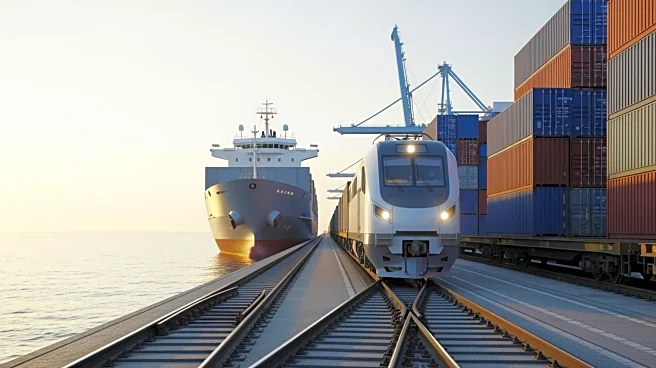
DHL Global Forwarding is expanding its multimodal transport networks to accommodate the growing complexity and demand in global trade, particularly focusing on Vietnam as a central hub. This strategic move is driven by the diversification of supply chains
and increased trade flows into and out of Vietnam. Laurence Cheung, Country Manager of DHL Global Forwarding Vietnam, highlighted the company's shift from traditional air and ocean freight to more flexible, customer-focused logistics solutions. This includes hybrid routes that combine sea and air freight across continents, such as transporting goods from Vietnam to the U.S. by sea and then to Europe by air. Vietnam's role in global supply chains is becoming more significant as companies seek to de-risk by reducing reliance on single markets, with trade flows increasingly following a China-Vietnam-global pattern.
Why It's Important?
The expansion of DHL's multimodal networks in Vietnam is significant as it reflects broader trends in global trade and supply chain management. As companies diversify their supply chains to mitigate risks associated with over-reliance on single markets, Vietnam is emerging as a critical logistics and manufacturing hub. This development is crucial for U.S. businesses that rely on efficient and resilient supply chains to maintain competitiveness. The increased foreign direct investment and government support in Vietnam further enhance its role in global trade, offering U.S. companies opportunities for cost optimization and improved inventory management. However, challenges such as labor market constraints in Vietnam could impact the sustainability of this growth.
What's Next?
As DHL continues to expand its multimodal capabilities, the focus will likely be on further enhancing infrastructure and transparency to support Vietnam's growing role in global supply chains. The company may also invest in talent development to address labor market challenges and ensure sustained growth. For U.S. businesses, adapting to these changes will be crucial, potentially involving strategic partnerships with logistics providers like DHL to leverage Vietnam's position as a logistics hub. Additionally, monitoring the evolving trade patterns and regulatory environment in Vietnam will be essential for businesses aiming to capitalize on these developments.
Beyond the Headlines
The shift towards multimodal transport and Vietnam's rising prominence in global supply chains could have long-term implications for international trade dynamics. As companies continue to diversify their supply chains, there may be a gradual shift in global economic power towards regions like Southeast Asia. This could lead to increased geopolitical influence for countries like Vietnam, impacting international relations and trade policies. Furthermore, the emphasis on supply chain resilience and adaptability may drive innovation in logistics and transportation technologies, potentially reshaping the industry landscape.