


What's Happening?
Skyways Air Transportation Inc. has enlisted a lobbying team from Greenberg Traurig LLP to advocate its interests on Capitol Hill. The lobbying team includes individuals with prior committee experience, specifically with the House Armed Services Committee
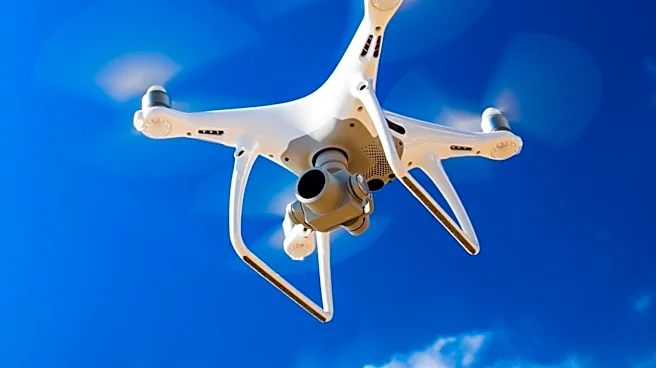
and the Transportation and Infrastructure Committee. Key members of the team include Misha Lehrer, Matthew Satterley, Joel Roberson, Dan Sennott, Chris Senn, and Jon Maslyn, all of whom have extensive experience in government relations and lobbying. This engagement aims to influence federal policy regarding drone operations, particularly in light of recent regulatory changes such as the Federal Aviation Administration (FAA) Part 108 rule, which facilitates routine commercial beyond-visual-line-of-sight operations for drones.
Why It's Important?
The engagement of a prominent lobbying firm like Greenberg Traurig by Skyways Air Transportation underscores the critical role of legislative advocacy in shaping the future of the drone industry in the U.S. The FAA Part 108 rule and other federal initiatives are transforming commercial drone operations, moving towards scalable package delivery and enhanced security measures. Skyways' lobbying efforts are crucial for ensuring that its business model aligns with, and potentially influences, these evolving regulations. The involvement of lobbyists with experience in key congressional committees, such as the House Armed Services and Transportation and Infrastructure Committees, highlights the intersection of national security, infrastructure, and commercial interests in drone policy. This lobbying push could significantly impact the operational framework for drone companies, affecting market entry, operational costs, and the overall growth trajectory of the U.S. drone sector.
What's Next?
The Greenberg Traurig lobbying team will actively engage with members of Congress and relevant committees to advance Skyways Air Transportation's agenda. Their efforts will focus on navigating and influencing the implementation of new drone regulations, such as the FAA Part 108 rule, and advocating for policies that support the company's commercial objectives. This will likely involve discussions around operational tiers for drone delivery, security measures, and the domestic drone supply chain, as emphasized by the FCC. The outcome of these lobbying activities could shape future legislative amendments or regulatory interpretations, directly impacting the operational capabilities and market opportunities for Skyways Air Transportation and the broader drone industry in the U.S.
Beyond the Headlines
The lobbying efforts by Skyways Air Transportation reflect a broader trend of emerging technology companies seeking to proactively shape regulatory environments. As drone technology advances, the legal and policy frameworks struggle to keep pace, creating a critical need for industry input. This engagement highlights the complex interplay between technological innovation, economic interests, and government oversight. The focus on securing a domestic drone supply chain, as noted by the FCC, also points to national security and economic sovereignty concerns, suggesting that drone policy is not merely about commercial convenience but also about strategic industrial development. The success of such lobbying can set precedents for how other disruptive technologies are integrated into existing regulatory structures, influencing future innovation and market dynamics.