







What's Happening?
New research published in the Journal of Quaternary Science suggests that the massive altar stone at Stonehenge was likely transported by human effort rather than glacial movement. The study, which involved modeling ancient ice flows, found no direct
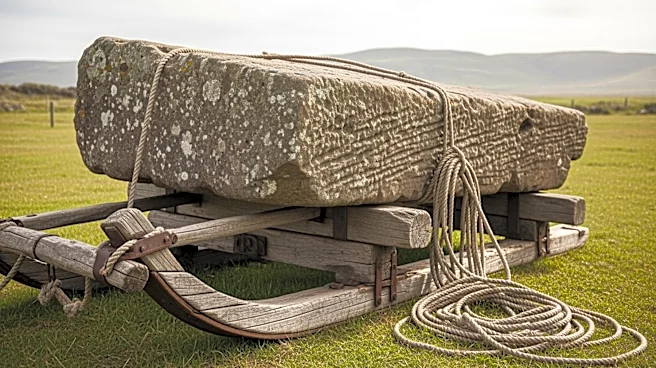
glacial path that could have moved the 13,000-pound stone from Scotland's Orcadian Basin to southern England. The researchers propose that Neolithic communities may have used a combination of dragging and floating techniques to move the stone over 450 miles. This finding challenges previous theories that glaciers played a significant role in the stone's relocation.
Why It's Important?
This research provides new insights into the capabilities and organizational skills of Neolithic societies, highlighting their ability to coordinate complex tasks over long distances. Understanding the human effort involved in constructing Stonehenge can reshape historical narratives about prehistoric engineering and social structures. It underscores the sophistication of ancient communities in resource mobilization and project execution, which may influence current archaeological interpretations and educational content about prehistoric human achievements.
Beyond the Headlines
The study raises questions about the cultural and symbolic significance of selecting a stone from such a distant location. This choice may reflect a deliberate effort to imbue the monument with specific cultural or spiritual meanings, akin to modern preferences for imported materials in construction. The research also invites further exploration into the social and economic structures that enabled such large-scale projects, potentially offering parallels to contemporary issues of resource allocation and community collaboration.