
What's Happening?
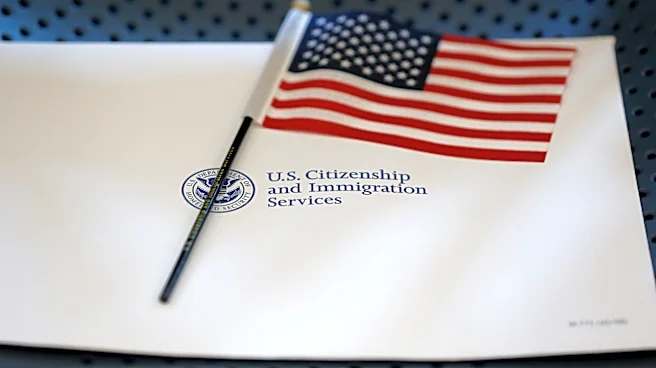
The Trump administration has announced a significant change to the green card process, requiring U.S. visa holders to return to their home countries to apply for permanent residency, except in extraordinary
circumstances. This policy, outlined in a memo from U.S. Citizenship and Immigration Services (USCIS), could potentially impact hundreds of thousands of legal immigrants, including skilled professionals in sectors like healthcare and technology. Historically, the 'adjustment of status' process allowed visa holders to remain in the U.S. while their green card applications were processed, a procedure that could take over a decade due to U.S. immigration law complexities. The new rule is seen as a victory for MAGA nativists over the tech industry, which relies heavily on global talent.
Why It's Important?
This policy shift could have profound implications for the U.S. economy and its global competitiveness, particularly in the technology sector, which depends on skilled foreign workers. The tech industry, a significant contributor to the U.S. economy, may face talent shortages, potentially stifling innovation and growth. The policy also reflects a broader ideological battle within the MAGA movement, prioritizing nativist views over economic pragmatism. The decision could deter highly skilled immigrants from seeking opportunities in the U.S., impacting industries reliant on such talent and potentially leading to a brain drain.
What's Next?
The implementation details of this policy remain unclear, and its enforcement could vary across different USCIS offices. There is potential for legal challenges or policy reinterpretations that might mitigate its impact. The tech industry and other stakeholders may lobby for exceptions or seek judicial intervention to prevent the policy from being fully enacted. The policy's long-term effects on U.S. immigration patterns and the tech sector's global standing will depend on these developments.