






What's Happening?
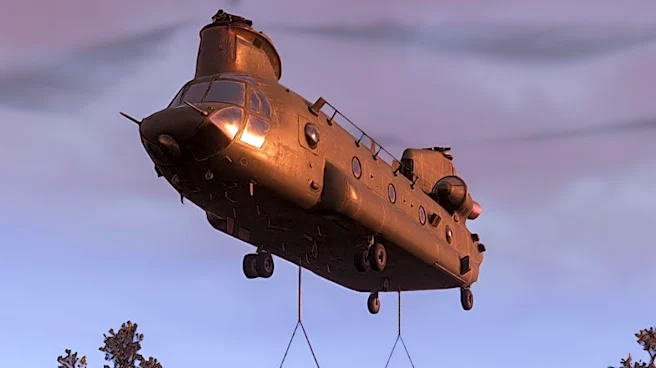
The CH-47 Chinook helicopter, a twin-engine, tandem rotor heavy-lift aircraft developed by Boeing Vertol, has been a cornerstone of military and commercial heavy-lift operations since its introduction to the U.S. Army in 1962. The aircraft's unique tandem rotor design
provides superior stability and the ability to carry heavy loads internally and externally. Key variants include the CH-47D, often used for civil and commercial heavy-lift operations, and the CH-47F, which remains a frontline military asset. The CH-47F boasts a maximum speed of around 170 knots, can carry over 26,000 pounds externally, and operates at altitudes up to 20,000 feet. Chinooks have a rich operational history, serving in conflicts from the Vietnam War, where they performed troop transport, artillery emplacement, and casualty evacuation, to more recent deployments in Afghanistan and Iraq for air assault, resupply, and medical evacuation. Beyond military roles, Chinooks are crucial in aerial firefighting, heavy construction, infrastructure projects, and rapid-response disaster relief, often working with fixed-wing cargo aircraft to establish logistics chains.
Why It's Important?
The enduring operational capability and versatility of the Chinook helicopter are vital for both national defense and civilian emergency response. Its heavy-lift capacity makes it indispensable for transporting large equipment and personnel in challenging environments, where other aircraft cannot operate. In military contexts, the Chinook's ability to move artillery, fuel, and ammunition across vast distances significantly enhances logistical support and operational reach. For civilian applications, its role in disaster relief, such as delivering emergency supplies and evacuating populations from flood zones, directly saves lives and aids recovery efforts. The continued upgrades and variants, like the CH-47F Block II, ensure that the Chinook remains relevant and capable of meeting evolving operational demands, including increased lift in hot-and-high conditions. This sustained utility underscores the strategic importance of such heavy-lift platforms in maintaining national security and humanitarian aid capabilities.
What's Next?
The CH-47F and its Block II upgrades are expected to continue serving as primary heavy-lift assets for the U.S. Army and allied forces for decades. Future developments may focus on further enhancing fuel efficiency, integrating advanced avionics, and improving survivability in contested environments. For civilian operators, the demilitarized CH-47D and Vertol 234 models will likely remain the primary options for commercial heavy-lift missions, with ongoing refurbishment and modernization efforts to extend their service life. The demand for Chinook capabilities in disaster relief and infrastructure projects is expected to grow, driven by increasing climate-related events and global development needs. Specialized heavy-lift operators will continue to provide charter services, connecting clients with Chinook capabilities without the burden of ownership, ensuring these critical aircraft remain accessible for diverse missions.
Beyond the Headlines
The Chinook's longevity and adaptability highlight a broader trend in military aviation: the continuous evolution and repurposing of proven platforms. Its design, originating in the late 1950s, has been consistently updated to meet modern demands, showcasing the value of modularity and upgradeability in defense procurement. Ethically, the Chinook's extensive use in humanitarian missions underscores the dual-use nature of military technology, where assets designed for conflict can be repurposed for life-saving operations. The economic impact extends to specialized industries that support its maintenance, upgrades, and commercial operations, creating a niche market for heavy-lift services. Culturally, the Chinook has become an iconic symbol of resilience and capability, recognized globally for its distinctive silhouette and its role in critical missions, from battlefields to disaster zones.